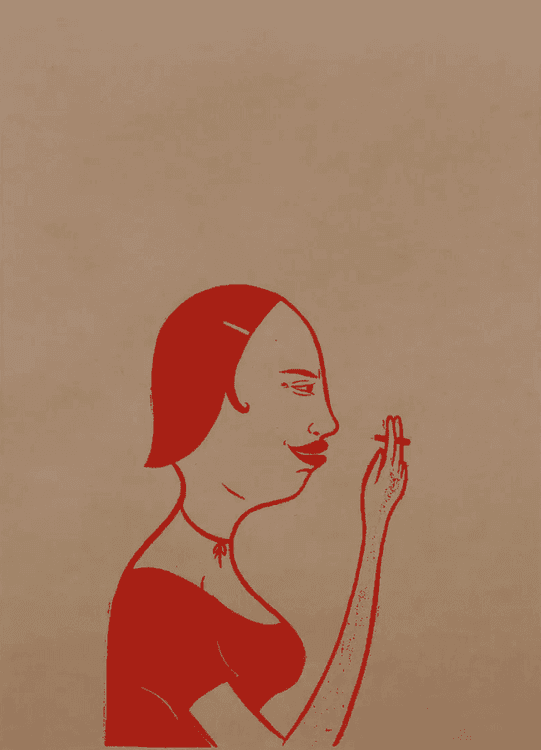
Margaret Kilgallen
 American
|

Margaret Kilgallen was an American artist known for her distinctive combination of painting, drawing, printmaking, installation, and graffiti. A central figure in San Francisco’s influential Mission School, Kilgallen developed a visual language inspired by American folk art, hand-painted signage, typography, traditional printmaking, and the vernacular imagery of everyday urban life.Born in Washington, D.C., Kilgallen received a BA in printmaking from Colorado College in 1989 before moving to the San Francisco Bay Area. Her work as a bookbinder and conservator at the San Francisco Public Library strengthened her interest in lettering, printing techniques, and historical forms of graphic communication. She frequently worked with found or discarded materials, including wood, paper, cardboard, and salvaged objects, deliberately embracing the imperfections of handmade production.Kilgallen became particularly recognized for large-scale installations and murals combining bold, hand-painted lettering with stylized figures. Women frequently appear as central characters in her work—independent, physically capable, and unconventional figures engaged in activities such as cycling, surfing, fighting, and playing music. Her imagery challenged conventional representations of femininity while celebrating overlooked individuals and forms of popular culture.Closely connected with the graffiti and street-art communities of San Francisco, Kilgallen also painted freight trains under the name “Matokie Slaughter.” Her work brought together street culture and traditional craftsmanship at a time when both were becoming increasingly influential within contemporary art.Despite her death in 2001 at the age of 33, Kilgallen left a significant and enduring legacy. Her work was included posthumously in the 2002 Whitney Biennial and is held in major institutional collections, including the San Francisco Museum of Modern Art. Today, she is regarded as one of the most influential artists associated with the Bay Area art scene of the 1990s.