
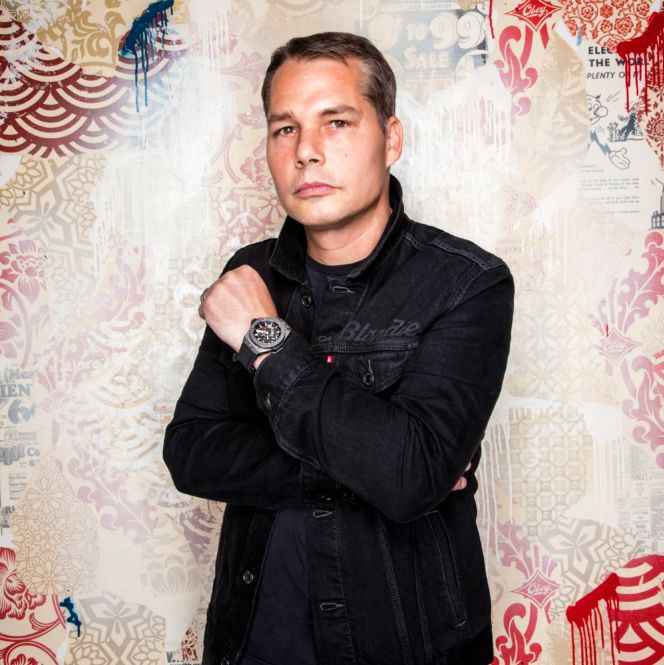


Shepard Fairey is an American graphic artist, activist, and pivotal figure in the Street Art movement, celebrated for his bold visual language and politically charged imagery. Alongside artists such as Banksy and Mr Brainwash, Fairey helped shift street art into mainstream cultural consciousness through murals, stickers, prints, and public interventions that merge typography, propaganda aesthetics, and social critique. Born in Charleston, South Carolina in 1970, he studied illustration at the Rhode Island School of Design, graduating in 1992. Fairey first gained widespread attention with his 1989 André the Giant Has a Posse sticker campaign, which later evolved into his landmark Obey series. This project established the foundation of his visual identity and paved the way for his global influence. He is perhaps best known for Hope (2008), the red, white, and blue portrait of Barack Obama that became an iconic symbol of the presidential campaign and one of the most recognisable political images of the twenty-first century. In 2017, he produced a series of posters featuring diverse women in response to xenophobic rhetoric during the U.S. election cycle. Fairey’s works are held in major institutions including the Smithsonian, the Los Angeles County Museum of Art, and the Victoria and Albert Museum, reflecting the enduring power of his artistic and activist legacy.
About Shepard Fairey (Obey)
Shepard Fairey’s artistic practice grew out of skateboarding culture, punk design, and DIY creative ethos. After his time at the Rhode Island School of Design, he continued to expand the reach and scale of his work through public space interventions and independent printmaking. His Obey campaign, derived from the André the Giant sticker, explored themes of power, influence, and the psychology of propaganda, encouraging viewers to question authority and examine how imagery shapes public perception.
Throughout his career, Fairey has blended commercial, graphic, and fine art aesthetics, embracing both street-level distribution and gallery exhibition. His posters, murals, and prints circulate widely, often addressing social justice concerns including environmental activism, anti-war sentiment, racial equality, and human rights. Today he lives and works in Los Angeles, where he continues to produce artworks and large-scale public projects that challenge cultural narratives and promote civic engagement.
Iconic Series and Artworks
Fairey’s oeuvre includes several landmark series that have shaped his reputation. The Obey series, with its stylised portrait of André the Giant and bold monosyllabic command, became a global visual phenomenon, establishing his interest in the mechanics of persuasion. Hope (2008), his portrait of Barack Obama, remains one of the most iconic political artworks in recent history, symbolising optimism and grassroots mobilisation during the presidential campaign.
His We the People posters from 2017 - depicting culturally diverse women in a patriotic colour palette - became widely disseminated symbols of resistance and solidarity. Fairey has also created monumental murals around the world, from Los Angeles and New York to Paris and Hong Kong, each combining intricate patterns with urgent social messaging. Across media, his works remain instantly recognisable for their graphic intensity and activist spirit.
Artistic Techniques and Themes
Fairey’s style draws heavily from propaganda posters, punk zines, stencil art, and advertising design. He employs strong linework, limited colour palettes, and bold typography to create compositions that are immediately impactful. His process often involves screen printing, collage, and the layering of ornamental patterns with high-contrast portraiture.
Themes central to his work include power structures, political messaging, cultural identity, dissent, and the circulation of images. Many of his pieces interrogate how visual communication shapes collective consciousness, encouraging viewers to critically assess the symbols and messages that saturate society. Fairey’s art balances aesthetic clarity with ideological urgency, making his work both visually compelling and socially resonant.
Art Market and Investment
Shepard Fairey’s art market is robust, supported by the widespread appeal of his imagery and his influential position within contemporary street art. His limited-edition prints are especially sought after and often sell out immediately upon release, creating strong activity on the secondary market. Originals, canvas works, and large-scale pieces command significant prices, reflecting both the artistic value and cultural impact of his practice.
Collectors are drawn to Fairey’s blend of accessible production methods and meaningful political content. His cross-disciplinary visibility - spanning fine art, activism, fashion, music, and film - has bolstered long-term demand for his work. As interest in street art and socially engaged practice continues to grow, Fairey’s market position remains strong globally.
Authenticity and Provenance
Authenticating Shepard Fairey’s work is essential due to his prolific output and the prevalence of unauthorised reproductions. Many prints are signed, numbered, and issued directly through the artist’s studio or official channels such as Obey Giant. Documentation that includes purchase records, certificates of authenticity, and clear edition details helps confirm legitimacy.
Provenance should trace a work’s history through reliable sources including galleries, studio releases, and recognised dealers. For works acquired on the secondary market, verifying signatures, paper types, and print techniques is especially important. Collectors seeking guidance on authentication or provenance can contact support@fairart.io for assistance.