
From Walls to Auctions: How Banksy Transformed the Art Market
When Street Art Goes Corporate
Anti-Art Establishment
Banksy started in the business as an outsider, bypassing the gallery world to paint directly onto the walls of publicly accessible spaces. Early, his acts were free of charge and available to the world as a protest - produced without formal permissions and often completed in just a few days.
Success as irony
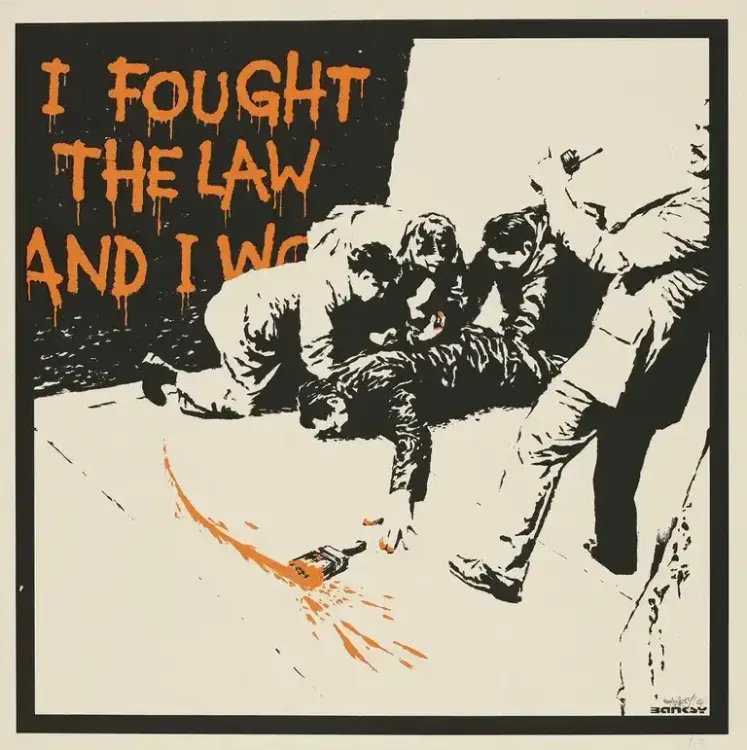
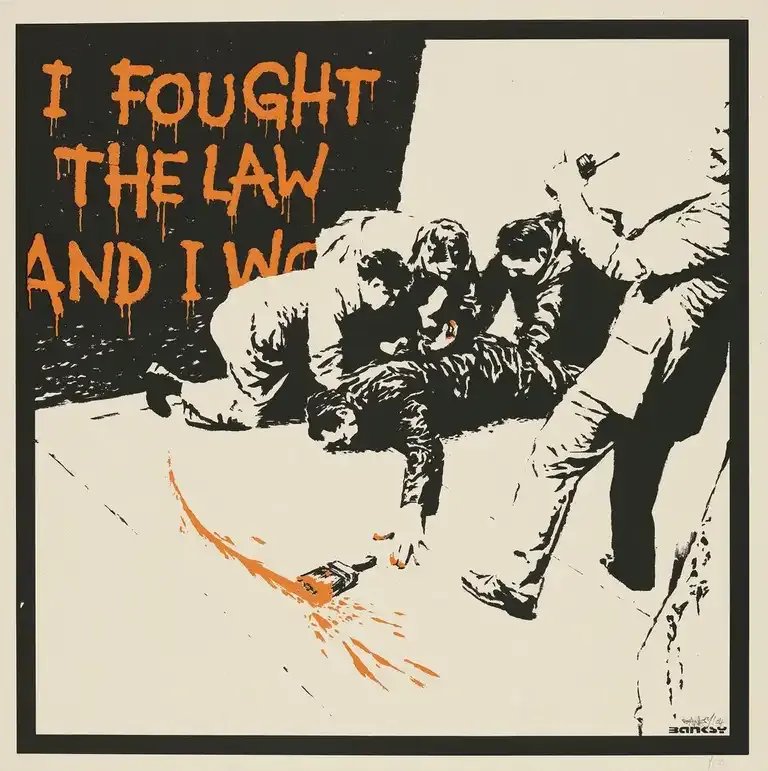
Paradoxically, work that criticises capitalism and commodification becomes some of the world's most coveted commodities, with a collector ready to pay millions to own just a portion of Banksy's dissent.
![A limited edition version of this work is available to buy or sell here on FairArt.] (https://cdn.fairart.io/image_78_6a56abcc20.webp)
Record Auction Sales
Girl With Balloon / Love is in the Bin
One of Banksy’s most recognisable market moments was in 2018 at Sotheby’s. After a cosmically lucrative £1.04 million bid for the mural - Girl With Balloon, almost immediately after the gavel fell, the entire artwork was shredded by a hidden shredding device in the frame called Love is in the Bin. The work ultimately reclaimed next-level market momentum when it was sold for £18.5 million with a typical Banksy market stunt where he pretends to mock the situation and leverage both interests.
Market Momentum
And never-ending values - with the sale of all of Banksy murals, we have Debt Parliament, and new iterations of stencils that are also on fire in the auction world. It reflects the total market can be a key factor - never seems to slow or pause the current magnitude of auctioning.
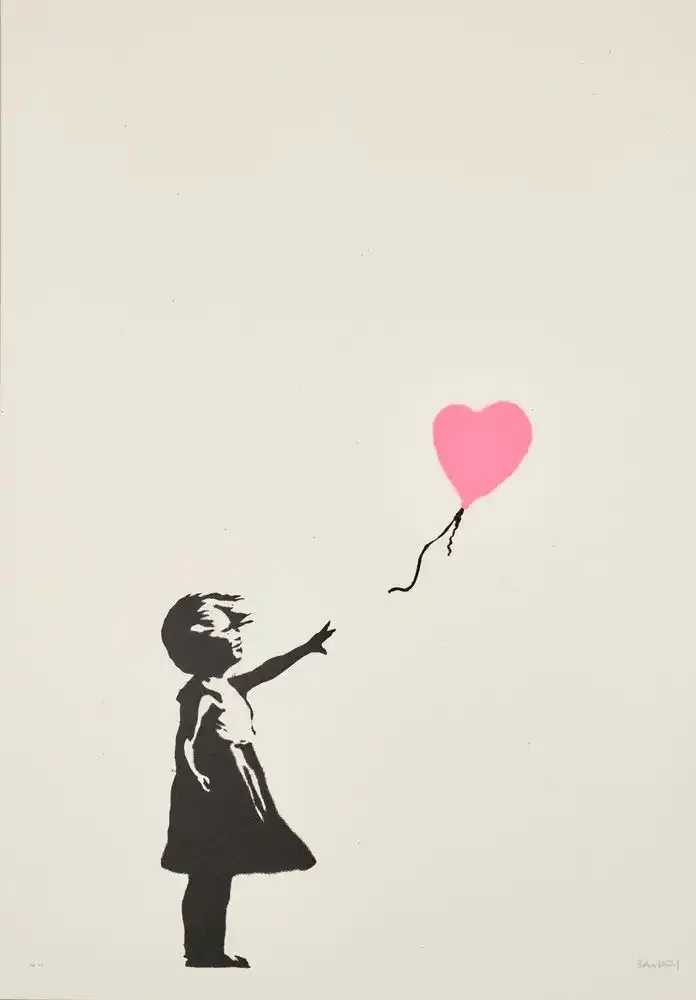 A limited edition version of this work is available to buy or sell here on FairArt.
New Values
Power of Authenticity and Pest Control
To maintain control of his work identity, Banksy created Pest Control, which is the only authenticator for any Banksy piece. There is a challenge to the traditional art world meaning for authenticating art within the context of Banksy, which in essence is creating a decentralised finance model and removing power from the auction sites and galleries.
Street art = temporary or temporary scarcity?
Banksy's wall installations are predominantly temporary, so his physical work is limited in availability and scarcity fundamentally driving up price and thus creating a crazy paradox as to its value and meaning is available.
![A limited edition version of this work is available to buy or sell here on FairArt.] (https://cdn.fairart.io/image_76_94b32af3c7.webp)
Disruption of Banksy Market
Criticism as Participation
There are now a number of formats that Banksy creates. He participates in the market both in terms of the auction process, while dismantling the organised value of art, stealing it away and destroying it with a shredder - often, unknowingly, maybe, at the same auction and restrictions of traditional collectors and fans fray. This leaves both critics of Banksy and those who own or want to own Banksy baffled and perplexed.
Democratisation of Valuation
Printmaking, editions and/or digital copies allow Banksy to dominate printmaking and graphic art. His work and imagery run the borders between both, valued as an original - that appeals to elite collectors and consumers but also takes on value across broader communities, memes, and the widespread public domain values.
Enduring Change
Banksy has completely changed how we think about street art, and also how we think about value, ownership and authenticity in the art market. He can show us the absurdity of commodification while also proving to be impossible to ignore. He has altered the rudimentary spaces of protest and profit in a direct line that stretches from unsanctioned mural to million-dollar auction piece.