


FairArt Guarantee
All artworks are covered. Get the item you ordered or your money back.
Before any work ships, our specialists verify its signature, numbering, edition details, provenance and any certificates. If anything doesn’t match, the sale is cancelled and you’re refunded in full under the FairArt Guarantee.
Whoever you buy from, you get the same checks, the same protection and the same team looking after you until the work is with you.
Every work is packed to our standards and sent by tracked express courier, fully insured in transit. You’ll see the exact shipping cost before you buy or make an offer.
Dispatch times vary depending on the nature of the work and how it needs to be packed. Once it’s on its way, you can follow every step with tracking updates by email and SMS, plus time-stamped proof of delivery.
Every work arrives as new, in the condition it was in when the artist or gallery first released it.
If anything isn’t as described when it arrives, let us know within 3 working days. We’ll arrange the return at the seller’s cost and refund you in full.
Have a question?
Have a question?
Additional Information
There are 2 ways to buy on FairArt - Buy Now or Make Offer.
There are 2 ways to Buy on FairArt
Learn more on our Buyer Page
2. Make Offer
Or, you can instead name your price by placing an offer.
If you hold the Highest Offer when the seller decides to Sell Now, your order will be confirmed automatically.
You can update or delete your offer anytime, free of charge, until it’s accepted.
There are 2 ways to sell on FairArt - Sell Now or List.
There are 2 ways to Sell on FairArt
Learn more on our Seller Page
1. Sell Now
If an interested collector has placed an offer on this work, you can sell it instantly at the ‘Sell Now’ price.
2. List
You can List this work for sale at a price of your choice.
If you hold the Lowest Listing (currently: £2,000) when a buyer decides to Buy Now, the sale will automatically be assigned to you.
You can update or delete your listing anytime, free of charge.
Artwork Specifications
2013
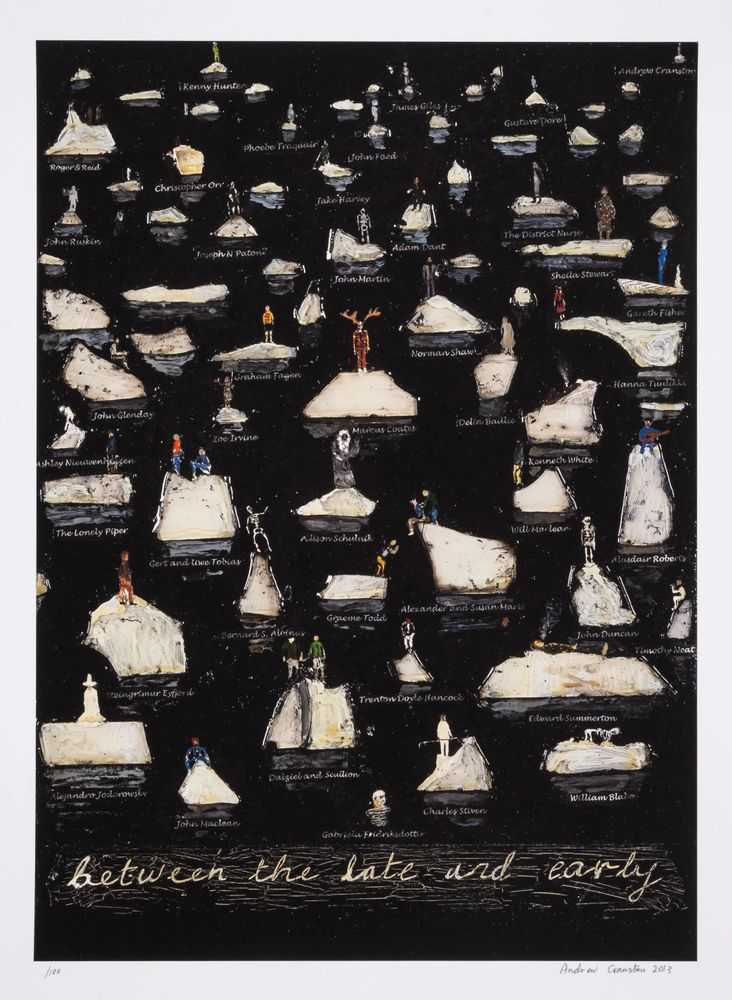
Print - Giclee print in colours on wove paper
100
Specifications
2013
Print - Giclee print in colours on wove paper
100
About The Artist
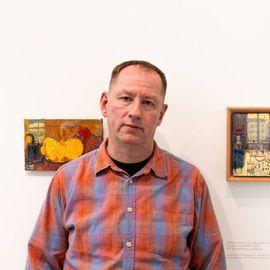
British, b. 1969
Andrew Cranston is a storyteller of sorts—though his narratives remain elusive. His work is captivating, not just for its interplay of narrative and humor, but for a humor akin to that of Samuel Beckett or Buster Keaton—where the absurd and the poignant intertwine in the fabric of everyday life.
Drawing from a wide range of sources, Cranston often interrogates the reliability of memory, blending fragments of his own personal history with literary passages, anecdotes, jokes, second-hand stories, cinematic imagery, and keen observations of the world around him. His process is deeply intuitive, often unfolding on the surfaces of hardback book covers. Rather than following a predetermined plan, his works emerge organically through the physical act of layering and reworking materials—paint, varnish, collage—until something essential takes form.
As Liza Dimbleby notes, “The images that are encouraged to surface are sometimes taboo—sex and solitude, death, nightmares—the ultimate questions, not without a sly humour.” Cranston’s art thrives in this space of uncertainty, where the familiar becomes strange and the ordinary, profound.