
FairArt Logo

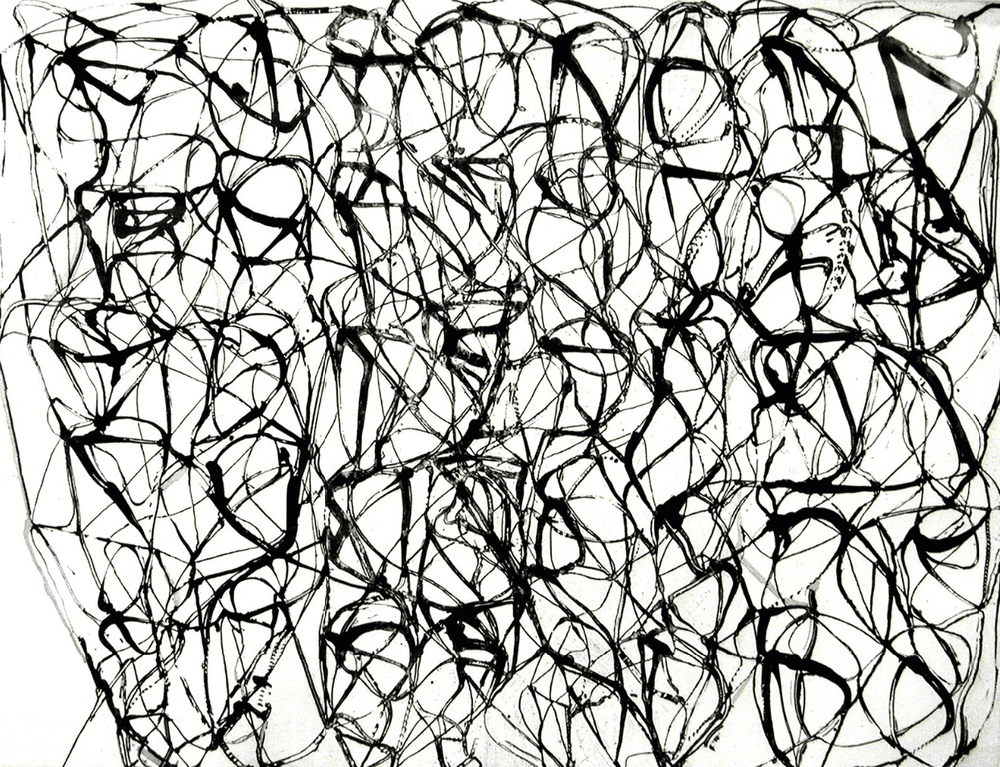
Zen Study II

Protected by the

This work isn’t listed right now - make an offer to notify potential sellers and encourage them into listing. .
Make offer

FairArt Guarantee

All artworks are covered. Get the item you ordered or your money back.

Authentication

Before any work ships, our specialists verify its signature, numbering, edition details, provenance and any certificates. If anything doesn’t match, the sale is cancelled and you’re refunded in full under the FairArt Guarantee.

Whoever you buy from, you get the same checks, the same protection and the same team looking after you until the work is with you.

Global Shipping

Every work is packed to our standards and sent by tracked express courier, fully insured in transit. You’ll see the exact shipping cost before you buy or make an offer.

Dispatch times vary depending on the nature of the work and how it needs to be packed. Once it’s on its way, you can follow every step with tracking updates by email and SMS, plus time-stamped proof of delivery.

Condition

Every work arrives as new, in the condition it was in when the artist or gallery first released it.

If anything isn’t as described when it arrives, let us know within 3 working days. We’ll arrange the return at the seller’s cost and refund you in full.

Have a question?

Additional Information

BuyingHow Buying Works

There are 2 ways to buy on FairArt - Buy Now or Make Offer.

There are 2 ways to Buy on FairArt

Learn more on our Buyer Page

1. Buy Now
This work isn’t listed right now. As a result, the Buy Now option is not available.

If the work is listed for sale, you can buy it instantly at the ‘Buy Now’ price.

2. Make Offer

There are currently no listings for this work. You can make an offer to alert potential sellers and encourage them into listing.

Our data shows that sellers are 85% more likely to list a work once an offer has been placed.

You can update or delete your offer anytime, free of charge, until it’s accepted.

Make Offer
SellingHow Selling Works

There are 2 ways to sell on FairArt - Sell Now or List.

There are 2 ways to Sell on FairArt

Learn more on our Seller Page

1. Sell Now
There are no live offers for this work, so the Sell Now option is not available.

If an interested collector has placed an offer on this work, you can sell it instantly at the ‘Sell Now’ price.

2. List

You can List this work for sale at a price of your choice.

If you hold the Lowest Listing when a buyer decides to Buy Now, the sale will automatically be assigned to you.

You can update or delete your listing anytime, free of charge.

List Now

Artwork Specifications

Date

1991

Size
Material

Print - Etching

Edition size

30

About The Artist

Brice Marden
Brice Marden

American, b. 1938

Renowned for blending Abstract Expressionism with Minimalism, Brice Marden’s paintings reveal a masterful command of color, form, and spatial nuance. His distinctive style—characterized by long, looping strokes of vivid paint set against monochromatic backgrounds—was deeply shaped by his environment, ranging from the bustling streets of New York City to the serene landscapes of the Aegean Islands, both of which he called home.Born in Bronxville, New York in 1938, Marden earned a Bachelor of Fine Arts from Boston University before completing a Master of Fine Arts at the Yale School of Art. There, he studied under influential artists such as Alex Katz and Jon Schueler, and formed connections with classmates like Richard Serra, Chuck Close, Nancy Graves, and Vija Celmins. Reflecting on his time at Yale, Marden once said, “When I got to Yale, I painted one self-portrait and that was the last figurative painting I ever did.”Marden's dedication to abstraction deepened in the 1960s, particularly during his time working as a guard at Jasper Johns’ 1964 retrospective at the Jewish Museum in New York. “Jasper has been a big influence on my work,” Marden recalled in 2019. “He added another dimension to what is reality in painting.”His first solo exhibition, held at Manhattan’s Bykert Gallery in 1966, introduced the public to his innovative use of oil and beeswax. Works like Nebraska—a monochromatic canvas in a muted blue-grey, inspired by a drive through the American Midwest—showcased his early explorations in surface and tone. That same year, he also began working as a studio assistant to Robert Rauschenberg, further embedding himself in the New York art scene.In the 1970s, Marden became known for his serene panel paintings—typically diptychs and triptychs rendered in just a few carefully chosen hues, such as red, yellow, and blue. He exhibited at Documenta 5 in Kassel in 1972 and the Whitney Biennial in 1973, and was honored with a mid-career retrospective at the Guggenheim in 1975. Around this time, he and his wife, artist Helen Marden, began spending time on the Greek island of Hydra, eventually purchasing a home there.Throughout the 1980s, Marden explored geometric abstraction on slabs of Greek marble, in a nod to the classical forms of artists like Piet Mondrian. In the 1990s, this geometric phase gave way to the gestural, calligraphic lines that would become his signature—lyrical, continuous movements across the canvas that embodied both precision and spontaneity.In 2017, Marden joined Gagosian gallery, marking a new chapter in his career. His market reached new heights in 2020 when Complements, a diptych in vibrant orange and blue painted between 2004 and 2007, sold for $30.9 million at auction—a record for the artist. Marden passed away in New York in 2023 at the age of 84, leaving behind a legacy that bridged gesture and restraint, emotion and intellect.

Your Recent Searches