

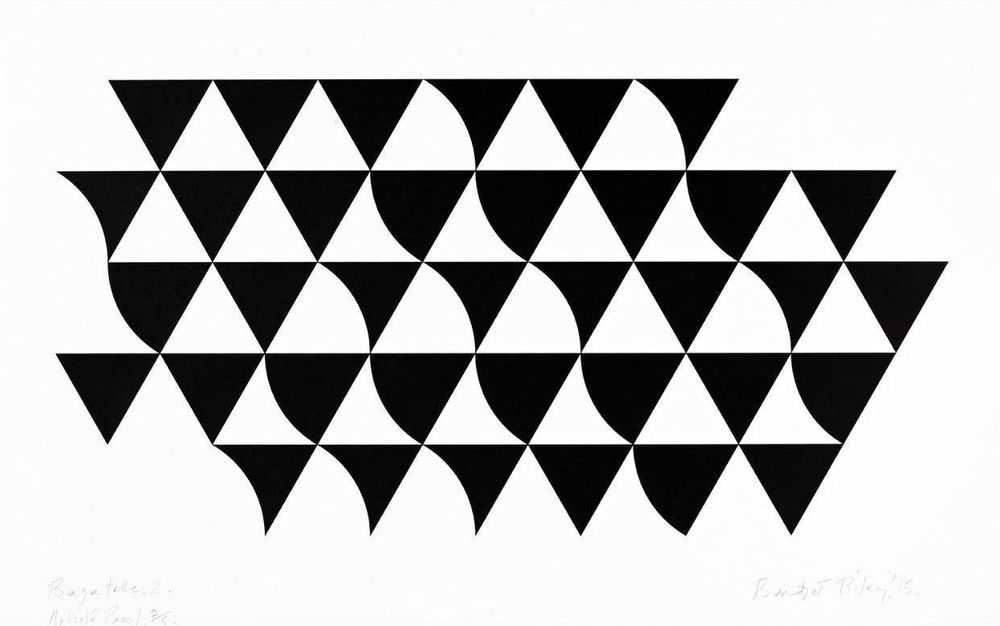
Bagatelle 2

How & Work
Protected by the
FairArt Guarantee
All artworks are covered. Get the item you ordered or your money back.
Before any work ships, our specialists verify its signature, numbering, edition details, provenance and any certificates. If anything doesn’t match, the sale is cancelled and you’re refunded in full under the FairArt Guarantee.
Whoever you buy from, you get the same checks, the same protection and the same team looking after you until the work is with you.
Every work is packed to our standards and sent by tracked express courier, fully insured in transit. You’ll see the exact shipping cost before you buy or make an offer.
Dispatch times vary depending on the nature of the work and how it needs to be packed. Once it’s on its way, you can follow every step with tracking updates by email and SMS, plus time-stamped proof of delivery.
Every work arrives as new, in the condition it was in when the artist or gallery first released it.
If anything isn’t as described when it arrives, let us know within 3 working days. We’ll arrange the return at the seller’s cost and refund you in full.
Have a question?
Have a question?
Additional Information
There are 2 ways to buy on FairArt - Buy Now or Make Offer.
There are 2 ways to Buy on FairArt
Learn more on our Buyer Page
1. Buy Now
If the work is listed for sale, you can buy it instantly at the ‘Buy Now’ price.
2. Make Offer
There are currently no listings for this work. You can make an offer to alert potential sellers and encourage them into listing.
Our data shows that sellers are 85% more likely to list a work once an offer has been placed.
You can update or delete your offer anytime, free of charge, until it’s accepted.
There are 2 ways to sell on FairArt - Sell Now or List.
There are 2 ways to Sell on FairArt
Learn more on our Seller Page
2. List
Or, you can instead List the work at a price of your choice.
If you hold the Lowest Listing when a buyer decides to Buy Now, the sale will automatically be assigned to you.
You can update or delete your listing anytime, free of charge.
Artwork Specifications
2015
Print - Screenprint in four colours with white under print on paper
75
Specifications
2015
Print - Screenprint in four colours with white under print on paper
75
About The Artist
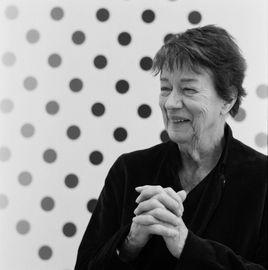
British, b. 1931
Bridget Riley’s intricate geometric abstractions helped define the Op Art movement of the 1960s, a moment in which perception itself became the subject of artistic inquiry. Through rhythmic arrangements of lines, curves, and vibrant colour sequences, Riley engineered optical effects that create the sensation of vibration, expansion, or movement across the surface of the canvas. While her early black-and-white works introduced these perceptual phenomena with striking clarity, she is best known today for her jubilant colour compositions, where precise chromatic relationships generate shifting visual experiences. Riley studied at Goldsmiths’ College and the Royal College of Art and briefly worked in advertising before committing fully to painting. Over the decades she has exhibited internationally in London, New York, Los Angeles, Paris, Shanghai, Tokyo, and Hong Kong. Her work forms part of major institutional collections including Arts Council England, the Centre Pompidou, the Metropolitan Museum of Art, Tate, and the Stedelijk Museum, and her paintings and prints continue to achieve millions on the secondary market.
Born in 1931 in London and raised partly in Cornwall during the Second World War, Riley developed a deep sensitivity to light, landscape, and visual sensation from a young age. After studying at Goldsmiths’ College and then the Royal College of Art, she spent several years working in commercial advertising, honing her eye for clarity and precision. By the late 1950s and early 1960s she began producing the works that would define her early career: black-and-white optical paintings that invited perceptual instability, generating waves, pulsations, and illusions of depth.
Riley’s breakthrough came with her inclusion in the 1965 exhibition The Responsive Eye at the Museum of Modern Art in New York, which positioned her as a leading figure in Op Art. Since then she has continued to expand her visual vocabulary, moving into colour-based abstraction that explores rhythm, repetition, and the psychology of seeing. Her career spans more than six decades and is celebrated for its intellectual rigour, formal beauty, and ongoing exploration of perception.