

‌
FairArt Logo

Protected by the

This work isn’t listed right now - make an offer to notify potential sellers and encourage them into listing. .
Make offer

FairArt Guarantee

All artworks are covered. Get the item you ordered or your money back.

Authentication

Before any work ships, our specialists verify its signature, numbering, edition details, provenance and any certificates. If anything doesn’t match, the sale is cancelled and you’re refunded in full under the FairArt Guarantee.

Whoever you buy from, you get the same checks, the same protection and the same team looking after you until the work is with you.

Global Shipping

Every work is packed to our standards and sent by tracked express courier, fully insured in transit. You’ll see the exact shipping cost before you buy or make an offer.

Dispatch times vary depending on the nature of the work and how it needs to be packed. Once it’s on its way, you can follow every step with tracking updates by email and SMS, plus time-stamped proof of delivery.

Condition

Every work arrives as new, in the condition it was in when the artist or gallery first released it.

If anything isn’t as described when it arrives, let us know within 3 working days. We’ll arrange the return at the seller’s cost and refund you in full.

Have a question?

Additional Information

BuyingHow Buying Works

There are 2 ways to buy on FairArt - Buy Now or Make Offer.

There are 2 ways to Buy on FairArt

Learn more on our Buyer Page

1. Buy Now
This work isn’t listed right now. As a result, the Buy Now option is not available.

If the work is listed for sale, you can buy it instantly at the ‘Buy Now’ price.

2. Make Offer

There are currently no listings for this work. You can make an offer to alert potential sellers and encourage them into listing.

Our data shows that sellers are 85% more likely to list a work once an offer has been placed.

You can update or delete your offer anytime, free of charge, until it’s accepted.

Make Offer
SellingHow Selling Works

There are 2 ways to sell on FairArt - Sell Now or List.

There are 2 ways to Sell on FairArt

Learn more on our Seller Page

1. Sell Now
There are no live offers for this work, so the Sell Now option is not available.

If an interested collector has placed an offer on this work, you can sell it instantly at the ‘Sell Now’ price.

2. List

You can List this work for sale at a price of your choice.

If you hold the Lowest Listing when a buyer decides to Buy Now, the sale will automatically be assigned to you.

You can update or delete your listing anytime, free of charge.

List Now

Artwork Specifications

Date

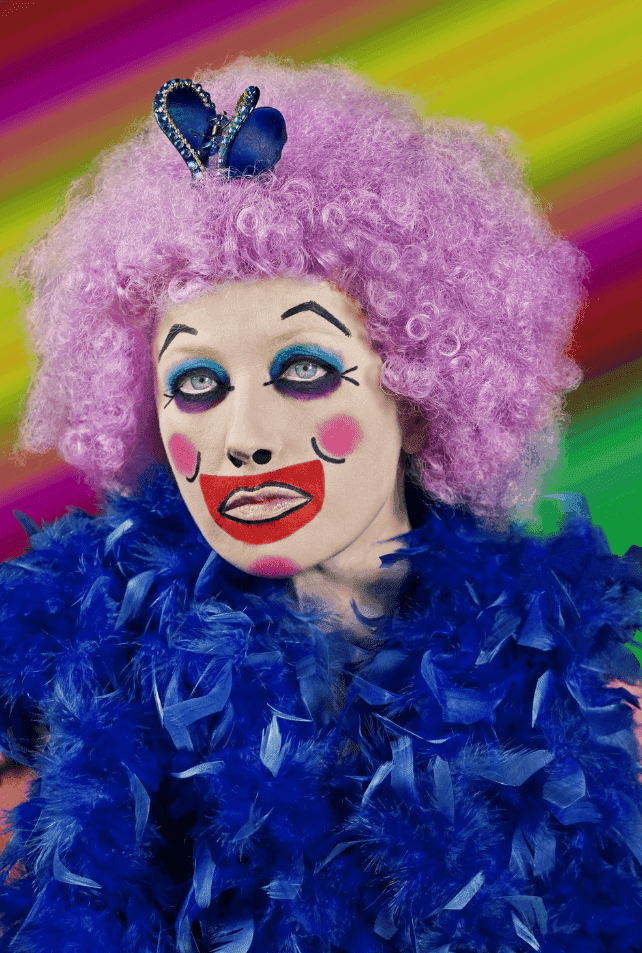
2012

Size
Material

Photography - Chromogenic color print

Edition size

10

About The Artist

Cindy Sherman
Cindy Sherman

American, b. 1954

For over four decades, Cindy Sherman has explored the fluid and performative nature of identity, using photography to dissect the visual and cultural codes of gender, celebrity, and artifice. A key figure of the Pictures Generation—a group that also includes Richard Prince, Louise Lawler, Sherrie Levine, and Robert Longo—Sherman came of age in the 1970s, responding to the pervasive influence of mass media with both critical insight and subversive wit. Like her peers, she appropriated imagery from advertising, cinema, television, and magazines, questioning the authenticity and authority of cultural representations.Sherman's fascination with role-playing and self-invention has remained central to her work. “I wish I could treat every day as Halloween,” she once said, “and get dressed up and go out into the world as some eccentric character.” This spirit shaped her breakthrough series Untitled Film Stills (1977–80), created shortly after her move to New York. In these photographs, she staged herself as archetypal women drawn from mid-20th-century B movies—housewives, ingénues, femme fatales—using props, costumes, and settings to evoke the promotional stills of classic cinema. Made when she was only 23, these 70 black-and-white images became iconic in feminist and postmodern discourse, challenging the passive roles assigned to women in visual culture and revealing how identity is constructed through repeated media tropes.Sherman has since continued to reinvent herself, creating serial works that examine the limits of self-representation and the stereotypes embedded in visual language. In series like Centerfolds (1981), History Portraits (1988–90), and Society Portraits (2008), she portrays a wide range of fictional personas—from Renaissance noblewomen to aging socialites—using elaborate costumes and theatrical effects. Her disguises often intentionally fail: wigs slip, makeup smears, and prosthetics reveal their artifice. Rather than concealing these imperfections, Sherman emphasizes them, turning the cracks in her illusions into metaphors for the constructed, unstable nature of all identity.Though she occasionally depicts glamorous figures, Sherman is more deeply drawn to the grotesque. In provocative series such as Disasters (1986–89) and Sex Pictures (1992), she confronts viewers with disfigured, abject bodies—works that challenge aesthetic norms and confront darker dimensions of human experience. Created during the height of the AIDS crisis, these images took on added urgency, confronting the fragility of the body and the social taboos surrounding it. “I’m disgusted with how people get themselves to look beautiful,” she remarked in 1986. “I’m much more fascinated with the other side.”Across her career, Sherman has relentlessly subverted the visual shorthand we rely on to define people and roles. By exposing the artifice behind identity and representation, she invites us to question the images we consume—and the assumptions they quietly reinforce.

Your Recent Searches