
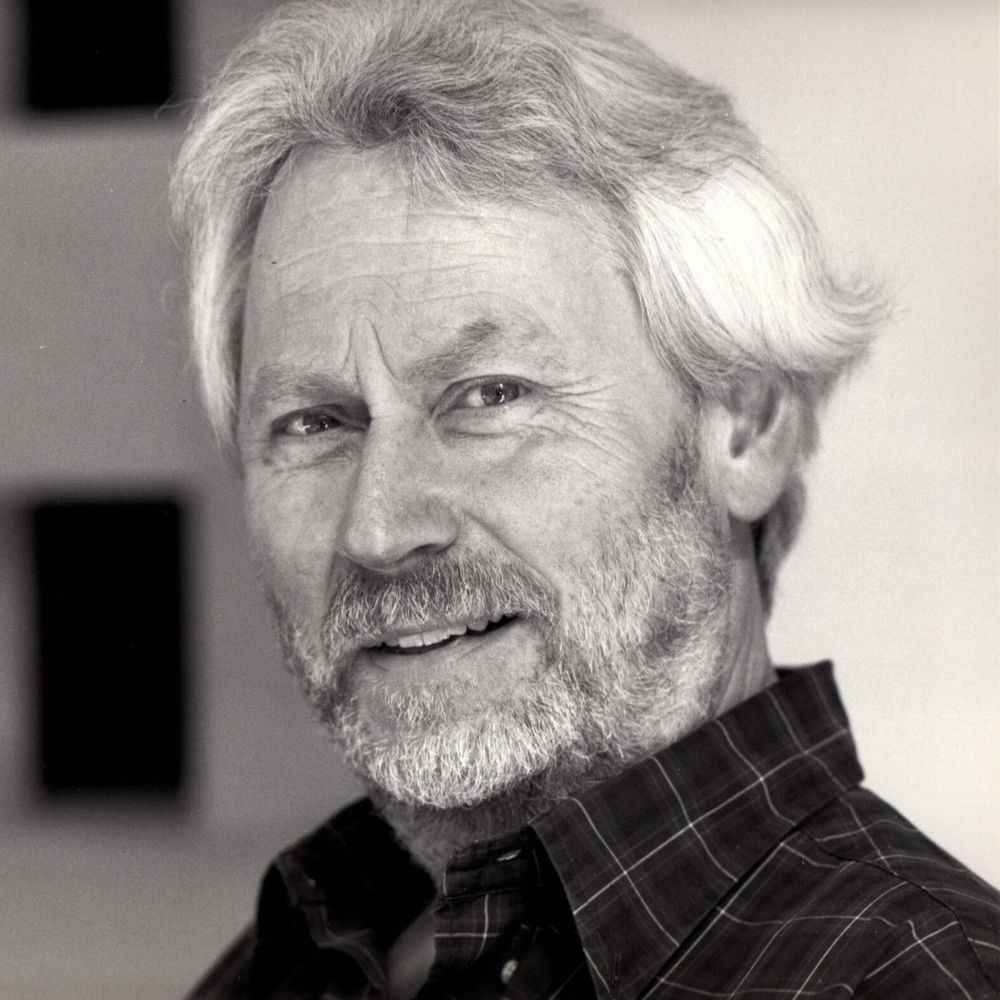


Donald Judd was a pioneering American artist whose uncompromising vision fundamentally transformed sculpture and redefined the relationship between art, architecture, and space in the twentieth century. Born in Excelsior Springs, Missouri, he studied philosophy and art history before establishing himself as an influential art critic in New York during the late 1950s and early 1960s — a period that sharpened his critical framework and informed his artistic direction.Turning away from illusionism and traditional composition, Judd developed what he termed “specific objects”: works that exist as autonomous forms in real space rather than representations of something else. Using industrial materials such as aluminum, steel, Plexiglas, and concrete, he created precise, modular structures defined by clarity, proportion, repetition, and material integrity. These works emphasize direct perception, inviting viewers to experience scale, light, and spatial relationships without symbolic distraction.Alongside his studio practice, Judd was a rigorous and prolific writer. His landmark 1965 essay Specific Objects articulated the philosophical foundations of Minimalism and argued for an art grounded in logic, order, and physical presence.In 1968, Judd permanently installed his work in a five-story cast-iron building in SoHo, establishing a model for long-term, site-specific presentation. He later expanded this vision in Marfa, Texas, where he founded the Chinati Foundation, a permanent installation space dedicated to large-scale works and the integration of art, architecture, and landscape.Over four decades, Judd’s work was exhibited internationally and is held in major museum collections worldwide. His enduring legacy lies not only in his objects, but in his radical rethinking of how art inhabits space — an approach that continues to shape contemporary practice and exhibition-making today.