
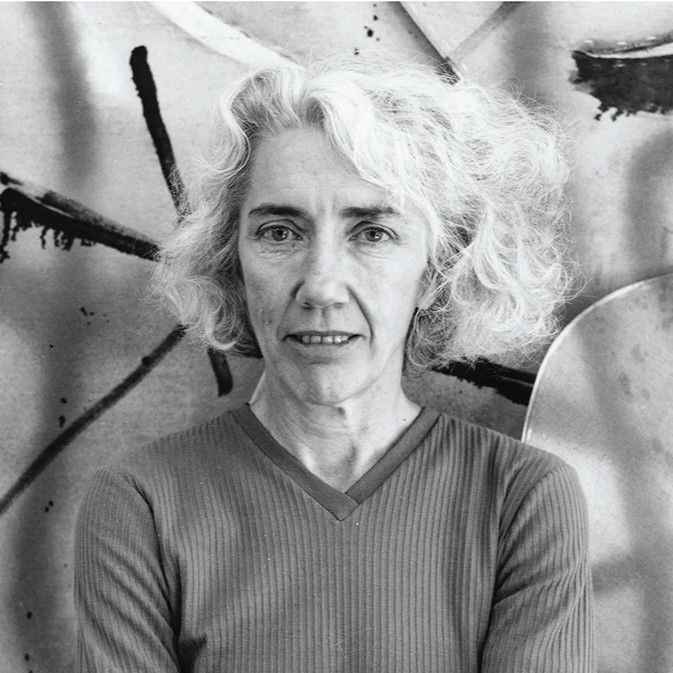


Elizabeth Murray is best known for her vibrant, large-scale shaped canvases that fuse abstraction with forms suggestive of cartoons and familiar domestic objects such as tables, chairs, and coffee cups. From the 1960s through the early 2000s, she radically expanded the language of painting by collaging, knotting, twisting, and warping her surfaces—often layering thick paint and allowing the canvas itself to bulge, jut, and protrude into space, blurring the boundary between painting and sculpture. The resulting works are exuberant and dynamic, characterized by explosive color and playful yet complex spatial relationships.Murray’s work has been exhibited internationally in major cultural centers including New York, London, Paris, Los Angeles, Tokyo, Amsterdam, and Beijing, and is held in the permanent collections of leading institutions such as the Art Institute of Chicago, the Hirshhorn Museum and Sculpture Garden, the Metropolitan Museum of Art, the Museum of Modern Art, the Guggenheim Museum, and the Whitney Museum of American Art. She was selected to present work at the 2007 Venice Biennale shortly before her untimely death. Today, her paintings are highly sought after, regularly achieving six-figure prices on the secondary market, underscoring her lasting impact on contemporary painting.