


FairArt Guarantee
All artworks are covered. Get the item you ordered or your money back.
Before any work ships, our specialists verify its signature, numbering, edition details, provenance and any certificates. If anything doesn’t match, the sale is cancelled and you’re refunded in full under the FairArt Guarantee.
Whoever you buy from, you get the same checks, the same protection and the same team looking after you until the work is with you.
Every work is packed to our standards and sent by tracked express courier, fully insured in transit. You’ll see the exact shipping cost before you buy or make an offer.
Dispatch times vary depending on the nature of the work and how it needs to be packed. Once it’s on its way, you can follow every step with tracking updates by email and SMS, plus time-stamped proof of delivery.
Every work arrives as new, in the condition it was in when the artist or gallery first released it.
If anything isn’t as described when it arrives, let us know within 3 working days. We’ll arrange the return at the seller’s cost and refund you in full.
Have a question?
Have a question?
Additional Information
There are 2 ways to buy on FairArt - Buy Now or Make Offer.
There are 2 ways to Buy on FairArt
Learn more on our Buyer Page
2. Make Offer
Or, you can instead name your price by placing an offer.
If you hold the Highest Offer when the seller decides to Sell Now (currently: £100), your order will be confirmed automatically.
You can update or delete your offer anytime, free of charge, until it’s accepted.
There are 2 ways to sell on FairArt - Sell Now or List.
There are 2 ways to Sell on FairArt
Learn more on our Seller Page
2. List
Or, you can instead List the work at a price of your choice.
If you hold the Lowest Listing (currently: £335) when a buyer decides to Buy Now, the sale will automatically be assigned to you.
You can update or delete your listing anytime, free of charge.
Artwork Specifications
2025
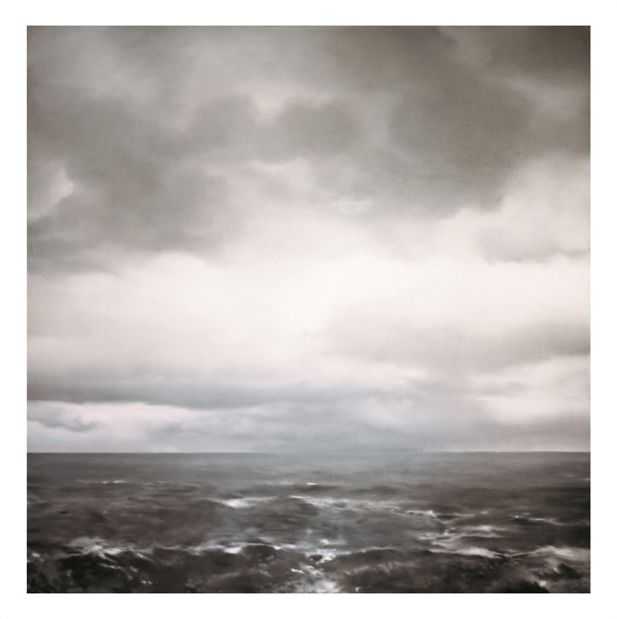
Print - Fine art print on paper
200
Freunde Der Kunsthalle
Specifications
2025
Print - Fine art print on paper
200
Freunde Der Kunsthalle
About The Artist

German, b. 1932
Love clarity? Love chaos? Gerhard Richter's artwork intersects these two poles—he is recognised as one of the most significant influential artists of the 20th and 21st centuries. Richter's work contains mesmerisingly particular photorealistic paintings as well as works driven by squeegeeing chaos through an emotive lens, then pulls it away and drops it into a free-falling abyss of colour. Richter refuses to be categorised in any one style of painting; he mastered realism, destroyed it, then redefined abstract painting altogether.
Richter's progression from early figurative works to mammoth canvases that feel like fractal explosions of color has engaged collectors, critics, and curators globally. Richter's work is now entrenched in the best collections worldwide, exhibited retrospectives; and sales at blue chip auctions. Richter's artworks are some of the most coveted of contemporary art history.
Peruse authenticated Gerhard Richter artwork — collectable edition artwork through to major works — and become part of an artist's legacy that continues to reinvent what painting can be.
Gerhard Richter was born in Dresden, Germany, in 1932. Before becoming a world-renowned artist, Richter's career included learning the formally unofficial style of Socialist Realism in East Germany. In 1961 - with the impending Berlin Wall - Richter moved to West Germany, and this forced move significantly altered the landscape of his work, which was then exposed to new socially and culturally avant-garde movements like Fluxus and Pop Art.
Richter has fluidly moved between different styles over the last sixty years while still maintaining a portfolio of work that includes paintings in the styles of photorealism, abstraction, colour charts, and unrelated glass-stained windows. Richter's work is inseparable from curated exhibitions at MoMA, Tate Modern and Centre Pompidou, and he practices as one of the most important voices in post-war and contemporary art.
Few artists have made their mark in art history with an abundance of work and a virulent condemnation of embracing a single “style.”