
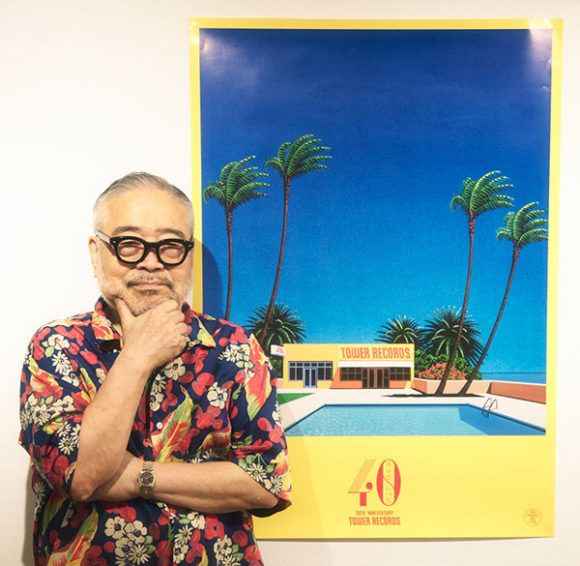


Hiroshi Nagai is a self-taught illustrator and graphic designer celebrated for his vibrant, meticulously composed paintings that evoke the atmosphere of an endless summer. Rendered with cinematic clarity and bathed in luminous, sun-saturated colour, his images are defined by retro-futuristic settings and a notable absence of human figures. These serene, dreamlike landscapes have become enduring icons of Japanese pop culture and played a central role in shaping the visual identity of the City Pop movement of the late 1970s and 1980s.Following travels to the United States and Guam between 1973 and 1975, Nagai became deeply captivated by the scenery he encountered—an experience that profoundly influenced the development of his distinctive style. Drawing inspiration from American Pop Art and British artists such as David Hockney, he began creating idealised visions of mid-century Americana. Expansive blue skies, quiet coastal settings, palm-lined streets, and tranquil nighttime cityscapes recur throughout his work, forming a visual language that blends elements of surrealism with a polished, graphic pop aesthetic.Nagai’s work gained widespread recognition in Japan at the turn of the 1980s, coinciding with the rise of City Pop, a music genre that reflected the optimism and prosperity of Japan’s bubble-era economy while drawing influence from the sounds and lifestyle imagery of 1960s Southern California. Through his idyllic, tropical, and unpopulated scenes, Nagai helped define the genre’s visual culture. His most celebrated contribution is the cover artwork for Eiichi Ohtaki’s landmark 1981 album A Long Vacation, widely regarded as one of the defining records of the movement.In the early 2020s, Nagai’s work experienced a renewed global appreciation, driven by the resurgence of City Pop through online platforms and a broader revival of tropical modern aesthetics rooted in nostalgia for Japan’s bubble-era optimism. Today, his imagery continues to resonate with new audiences, maintaining its status as a timeless symbol of escapism, leisure, and idealised modern life.