


Jacob Lawrence, a visionary artist integral to the Harlem Renaissance, redefined the narrative of Blacks in America, envisioning it not as a standalone experience but as an inseparable part of the broader American heritage. Born in New Jersey and later raised in the vibrant enclave of Harlem, Lawrence's artistic journey intricately intertwined with the cultural richness and intellectual fervor of the Harlem Renaissance during the 1920s and 1930s.
As a product of the Great Migration, a transformative period when millions of African Americans moved from the rural South to urban centers in the North, Lawrence considered himself a "child of the Great Migration." This mass relocation, spanning from 1915 to the 1950s, shaped not only his personal life but also became the thematic bedrock of his artistic expression.
Harlem, a crucible of creativity in the midst of the Harlem Renaissance, served as Lawrence's muse. The kaleidoscope of colors, patterns, and energy on the streets inspired him profoundly. His artistic journey began in the early 1930s when he enrolled in art classes, and by the age of 23, he had completed five narrative series depicting pivotal moments and figures in Black history, from Toussaint L'Ouverture to Harriet Tubman.
In the backdrop of World War II and the ongoing Great Migration, Lawrence embarked on a monumental project between 1940 and 1941—the Migration Series. Imbued with a deep sense of purpose, he immersed himself in research, listening to the stories of migrants, and spent months sketching and painting 60 individual panels that collectively told the poignant story of the Great Migration.
Lawrence's unique approach involved a swift and focused technique, using quick-drying tempera paint on hardboard panels. The result was a series of striking, minimalist images that distilled the vast migration into intimate vignettes, often centered on human figures. Each panel conveyed a wealth of information through geometric shapes and a limited color palette, reflecting Lawrence's belief in the power of simplicity.
Breaking racial barriers in 1941, Lawrence achieved a historic milestone by becoming the first African American artist to have his work acquired by The Museum of Modern Art, despite the prevailing segregation. Through his vivid and accessible visual storytelling, Lawrence not only celebrated the richness and complexities of African American history but also educated both his community and the broader world. His legacy endures as a testament to the transformative power of art in shaping narratives and fostering understanding across cultural boundaries.
Buy & Sell Jacob Lawrence Art
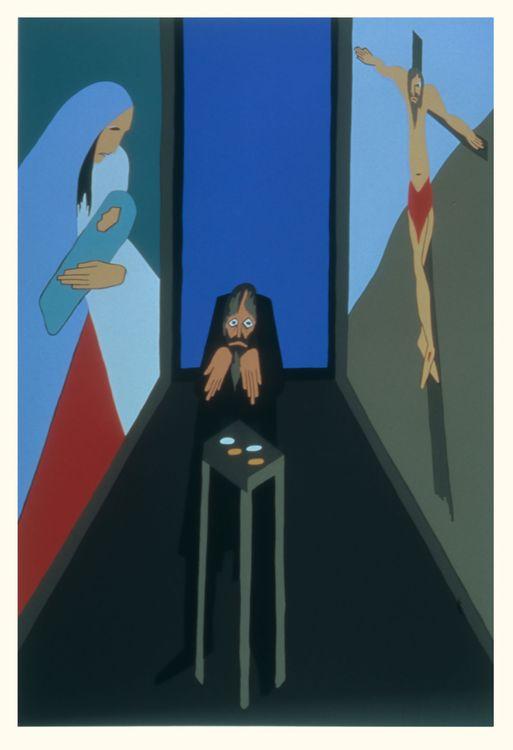

No. 14 John Brown collected money from sympathizers and friends to cary out his plans (The Legend of John Brown Series)
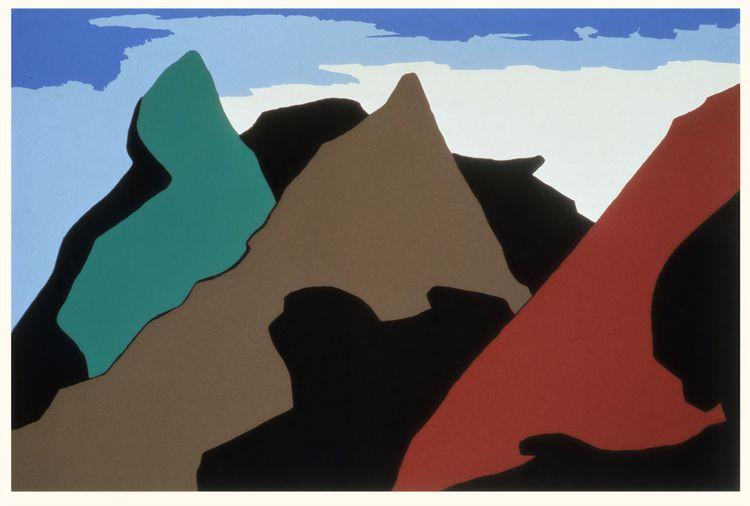

No. 8 John Brown's first thought of the place where he would make his attack came to him while surveying land for Oberlin College in West Virginia (The Legend of John Brown Series)
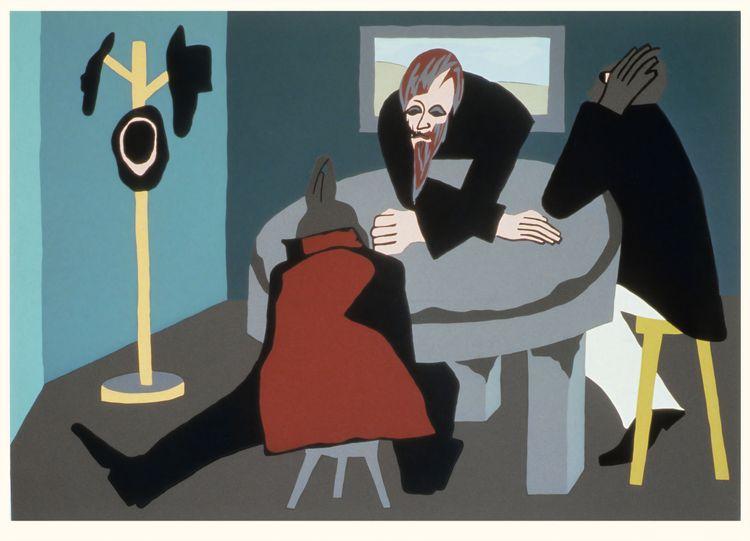

No. 7 To the people he found worthy of his trust, he communicated his plans (The Legend of John Brown Series)
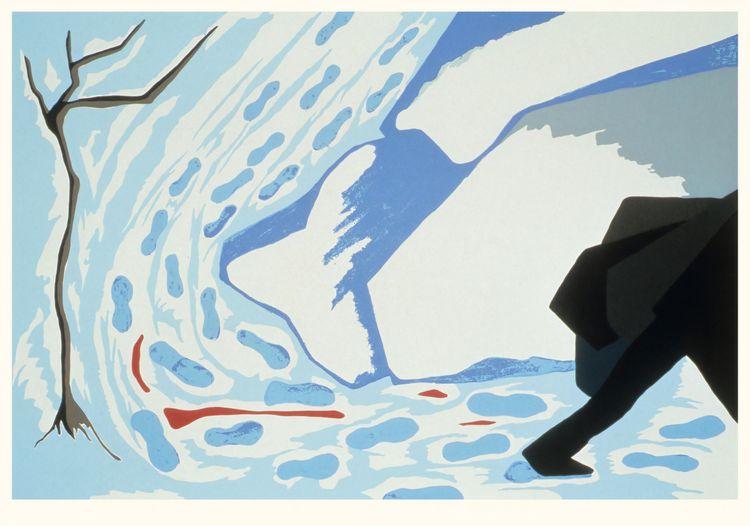

No. 16 In spite of a price on his head, John Brown, in 1859, liberated 12 Negroes from Missouri plantations (The Legend of John Brown Series)
No. 13 John Brown, after long meditation, planned to fortify himself somewhere in the mountains of Virginia or Tennessee and there make raids on the surrounding plantations, freeing slaves (The Legend of John Brown Series)
No. 4 His Adventures failing him, he accepted poverty (The Legend of John Brown Series)
No. 3 For 12 years, John Brown engaged in land speculations and wool merchandising; all this to make some money for his greater work which was the abolishment of slaver (The Legend of John Brown Series)
No. 1 John Brown, a man who had a fanatical belief that he was chosen by God to overthrow black slavery in America (The Legend of John Brown Series)
No. 6 John Brown formed an organization among the colored people of the Adirondack woods to resist the capture of any fugitive slave (The Legend of John Brown Series)
No. 2 For 40 years, John Brown reflected on the hopeless and miserable condition of the slaves (The Legend of John Brown Series)
No. 22 John Brown was found "Guilty of treason and murder in the 1st degree" and was hanged in Charles Town, Virginia on December 2, 1859 (The Legend of John Brown Series)
No. 17 John Brown remained a full winter in Canada, drilling Negroes for his coming raid on Harpers Ferry (The Legend of John Brown Series)
No. 15 John Brown made many trips to Canada organizing for his assault on Harpers Ferry (The Legend of John Brown Series)
No. 19 Sunday, October 16, 1859, John Brown with a company of 21 men, white and black, marched on Harpers Ferry (The Legend of John Brown Series)
No. 21 After John Brown's capture, he was put to trial for his life in Charles Town, Virginia (now West Virginia) (The Legend of John Brown Series)