


FairArt Guarantee
All artworks are covered. Get the item you ordered or your money back.
Before any work ships, our specialists verify its signature, numbering, edition details, provenance and any certificates. If anything doesn’t match, the sale is cancelled and you’re refunded in full under the FairArt Guarantee.
Whoever you buy from, you get the same checks, the same protection and the same team looking after you until the work is with you.
Every work is packed to our standards and sent by tracked express courier, fully insured in transit. You’ll see the exact shipping cost before you buy or make an offer.
Dispatch times vary depending on the nature of the work and how it needs to be packed. Once it’s on its way, you can follow every step with tracking updates by email and SMS, plus time-stamped proof of delivery.
Every work arrives as new, in the condition it was in when the artist or gallery first released it.
If anything isn’t as described when it arrives, let us know within 3 working days. We’ll arrange the return at the seller’s cost and refund you in full.
Have a question?
Have a question?
Additional Information
There are 2 ways to buy on FairArt - Buy Now or Make Offer.
There are 2 ways to Buy on FairArt
Learn more on our Buyer Page
2. Make Offer
Or, you can instead name your price by placing an offer.
If you hold the Highest Offer when the seller decides to Sell Now, your order will be confirmed automatically.
You can update or delete your offer anytime, free of charge, until it’s accepted.
There are 2 ways to sell on FairArt - Sell Now or List.
There are 2 ways to Sell on FairArt
Learn more on our Seller Page
1. Sell Now
If an interested collector has placed an offer on this work, you can sell it instantly at the ‘Sell Now’ price.
2. List
You can List this work for sale at a price of your choice.
If you hold the Lowest Listing (currently: £14,630) when a buyer decides to Buy Now, the sale will automatically be assigned to you.
You can update or delete your listing anytime, free of charge.
Artwork Specifications
1979
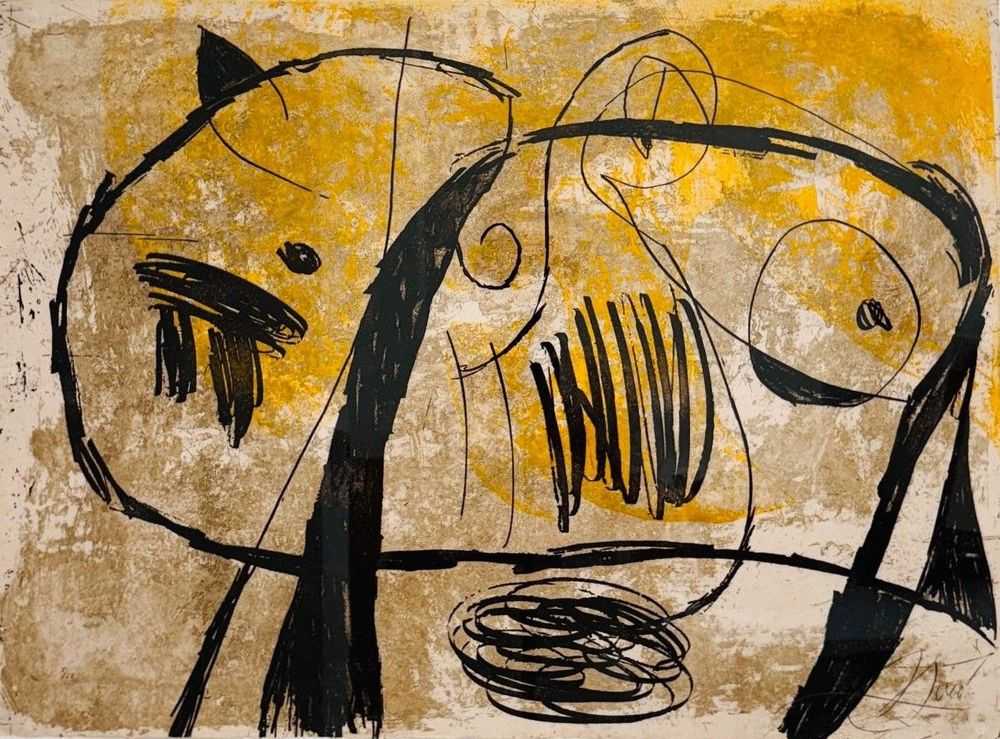
Print - Color Etching and Aquatint on Arches paper
30
Specifications
1979
Print - Color Etching and Aquatint on Arches paper
30
About The Artist
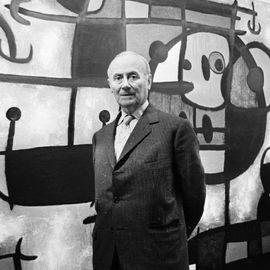
Spanish, b. 1893
Joan Miró Ferra, born on April 20, 1893, in Barcelona, embarked on an extraordinary artistic journey that spanned the 20th century. Initially drawn to business, he pursued art alongside his studies, attending La Lonja’s Escuela Superior de Artes Industriales y Bellas Artes. However, a pivotal moment came when a nervous breakdown prompted him to refocus his path back to art, studying under Francesc Galí’s Escola d’Art.
In 1918, he held his inaugural solo exhibition in Barcelona, encouraged by the supportive dealer José Dalmau. Miró's artistic voyage led him to Paris in 1920, where he encountered the luminaries of the art world, including Pablo Picasso. Immersed in the vibrant artistic community, he became involved with Dada activities and later aligned himself with the Surrealist movement in 1924.
Miró's creative exploration extended across various mediums, including lithography, etchings, ceramics, and sculpture, earning him international acclaim. Notable accolades include the Grand Prize for Graphic Work at the Venice Biennale in 1954.
Throughout the 1960s, Miró intensified his focus on sculpture, marking a significant phase in his artistic evolution. His work continued to captivate audiences through major retrospectives celebrated at esteemed institutions like the Musée National d’Art Moderne in Paris.
Even after his passing on December 25, 1983, in Palma de Mallorca, Spain, Miró's artistic legacy endured, inspiring generations with his boundless creativity and profound impact on the world of art. His influence transcended his lifetime, shaping the trajectory of modern art and leaving an indelible mark on the cultural landscape.