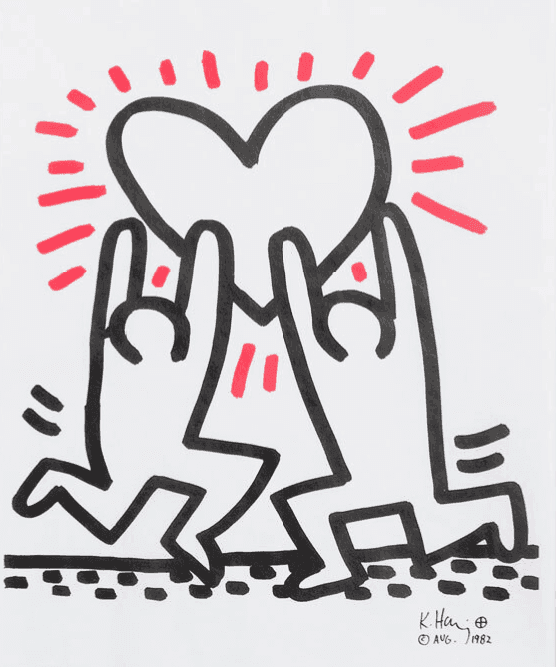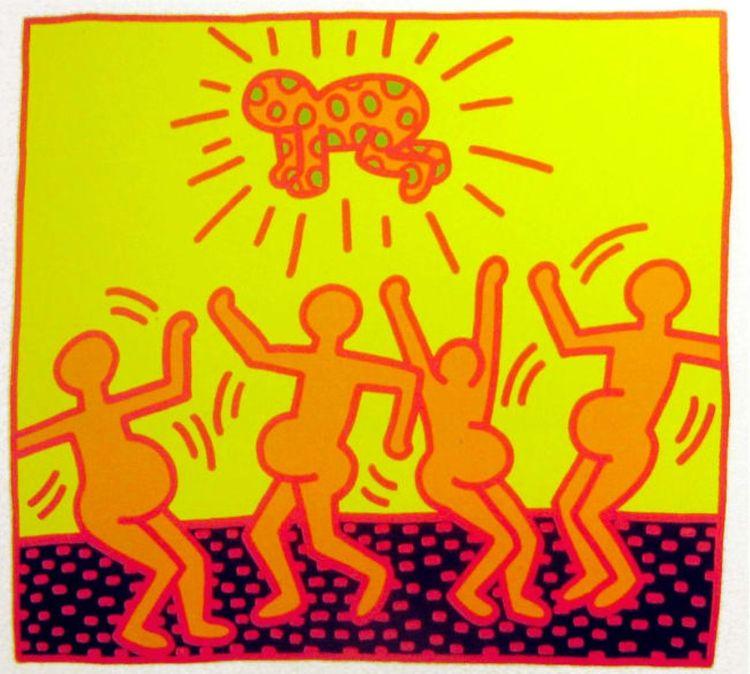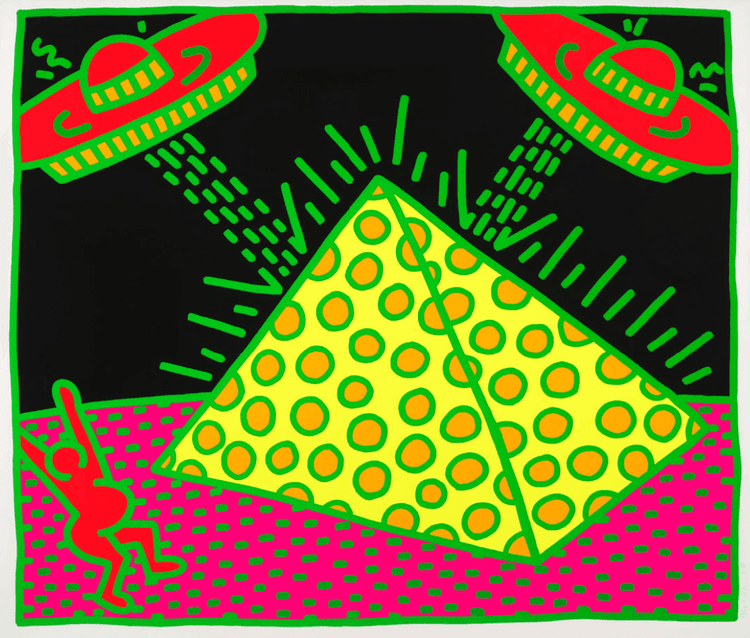

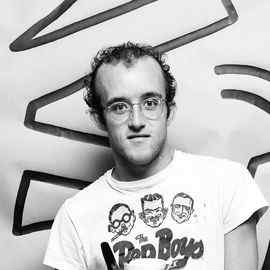


In the charged atmosphere of New York’s East Village in the 1980s, Keith Haring emerged as one of the most compelling visual voices of his generation. Rising alongside Jean-Michel Basquiat, Kenny Scharf, and Jenny Holzer, he bridged the gap between graffiti, street culture, and the contemporary art world with an immediacy that felt both democratic and revolutionary. Beginning with chalk drawings on blank subway advertising panels, Haring transformed public spaces into vibrant visual networks, using the city as his canvas long before his studio practice propelled him to international acclaim. His work was fast, lucid, rhythmic, and unafraid to confront the anxieties of the era, making Haring not only an artist of his time but an interpreter of its urgency.
About Keith Haring
Keith Haring was born in 1958 in Reading, Pennsylvania, and raised in nearby Kutztown, where early influences included cartoonists and graphic storytellers. When he arrived in New York in 1978 to study at the School of Visual Arts, he became immersed in a creative underground defined by clubs, experimental performance, and the explosion of graffiti across the city’s boroughs. Haring quickly aligned himself with this energy, developing a language of bold lines, simplified figures, and radiant symbols that conveyed movement and emotion with startling clarity.
His ascent was rapid. The raw vitality of his subway drawings gained a cult following almost instantly, attracting the attention of passersby, fellow artists, and eventually leading institutions. By the mid-1980s, Haring had become a central figure in the global conversation around contemporary art, using his rising platform to speak openly about social justice, inequality, and compassion. His diagnosis with AIDS in 1987 fundamentally shaped the final years of his life and intensified the urgency of his practice, culminating in some of his most direct and impactful works before his death in 1990.