
FairArt Logo

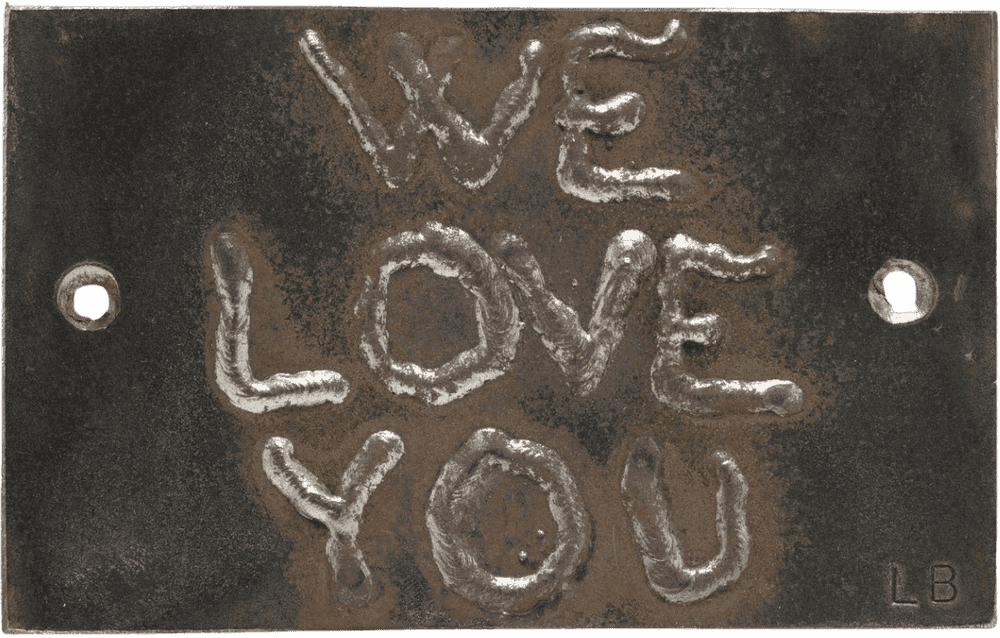
We Love You

Protected by the

This work isn’t listed right now - make an offer to notify potential sellers and encourage them into listing. .
Make offer

FairArt Guarantee

All artworks are covered. Get the item you ordered or your money back.

Authentication

Before any work ships, our specialists verify its signature, numbering, edition details, provenance and any certificates. If anything doesn’t match, the sale is cancelled and you’re refunded in full under the FairArt Guarantee.

Whoever you buy from, you get the same checks, the same protection and the same team looking after you until the work is with you.

Global Shipping

Every work is packed to our standards and sent by tracked express courier, fully insured in transit. You’ll see the exact shipping cost before you buy or make an offer.

Dispatch times vary depending on the nature of the work and how it needs to be packed. Once it’s on its way, you can follow every step with tracking updates by email and SMS, plus time-stamped proof of delivery.

Condition

Every work arrives as new, in the condition it was in when the artist or gallery first released it.

If anything isn’t as described when it arrives, let us know within 3 working days. We’ll arrange the return at the seller’s cost and refund you in full.

Have a question?

Additional Information

BuyingHow Buying Works

There are 2 ways to buy on FairArt - Buy Now or Make Offer.

There are 2 ways to Buy on FairArt

Learn more on our Buyer Page

1. Buy Now
This work isn’t listed right now. As a result, the Buy Now option is not available.

If the work is listed for sale, you can buy it instantly at the ‘Buy Now’ price.

2. Make Offer

There are currently no listings for this work. You can make an offer to alert potential sellers and encourage them into listing.

Our data shows that sellers are 85% more likely to list a work once an offer has been placed.

You can update or delete your offer anytime, free of charge, until it’s accepted.

Make Offer
SellingHow Selling Works

There are 2 ways to sell on FairArt - Sell Now or List.

There are 2 ways to Sell on FairArt

Learn more on our Seller Page

1. Sell Now
There are no live offers for this work, so the Sell Now option is not available.

If an interested collector has placed an offer on this work, you can sell it instantly at the ‘Sell Now’ price.

2. List

You can List this work for sale at a price of your choice.

If you hold the Lowest Listing when a buyer decides to Buy Now, the sale will automatically be assigned to you.

You can update or delete your listing anytime, free of charge.

List Now

Artwork Specifications

Date

2005

Size
Material

Sculpture - Welded steel wall plaque

Edition size

6

Features
Numbered

About The Artist

Louise Bourgeois
Louise Bourgeois

French, b. 1911

Born in Paris in 1911, Louise Bourgeois grew up in a household steeped in craft and tension. Her parents operated a tapestry restoration business, where the young Louise assisted by sketching missing fragments of damaged designs. This early exposure to artmaking was paired with a traumatic undercurrent: her father’s long-running affair with Sadie Gordon Richmond, the family’s live-in English tutor. This betrayal left a lasting emotional scar that profoundly shaped Bourgeois’s worldview and artistic voice.Though she initially studied mathematics, Bourgeois eventually shifted her focus to art. In Paris, she met American art historian Robert Goldwater, whom she married in 1938 before moving to New York. Together they raised three sons. In her early career, she concentrated on painting and printmaking, only fully embracing sculpture in the late 1940s.By the 1950s and early 1960s, Bourgeois’s output slowed as she turned inward, undergoing intensive psychoanalysis—an experience that would influence the deeply psychological nature of her later work. When she reemerged in 1964 with a solo exhibition, it featured uncanny, biomorphic plaster sculptures that marked a sharp break from her earlier, totemic wood pieces. From then on, shifting between materials, forms, and scale—oscillating between abstraction and figuration—became central to her evolving artistic language. Her recurring themes—loneliness, trauma, rage, and vulnerability—remained constant.For years, Bourgeois’s deeply personal and unorthodox work stood at odds with the prevailing art world focus on formalism. But by the 1970s and 1980s, as attention turned toward content and symbolism, her work gained recognition. In 1982, at the age of 70, she had a landmark retrospective at The Museum of Modern Art—her long-overdue breakthrough. What followed was a prolific and fearless final chapter: her monumental spider sculptures, haunting architectural “Cells,” suspended figures, and textile works crafted from her own clothing created an iconic and unsettling body of work.Throughout her life, Bourgeois drew incessantly, often late into the night, and returned frequently to printmaking. For her, art was more than expression—it was survival. As she famously said, “Art is a guarantee of sanity.” Louise Bourgeois died in New York in 2010, at the age of 98, leaving behind one of the most psychologically resonant legacies in modern art.

Your Recent Searches