FairArt Logo

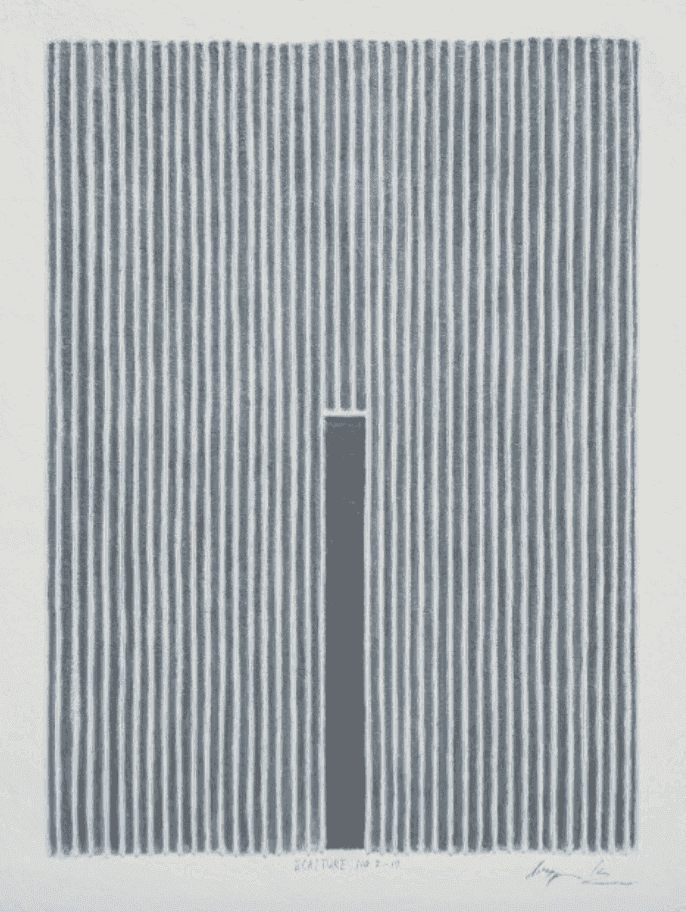
Écriture No.2 - 17

Protected by the

This work isn’t listed right now - make an offer to notify potential sellers and encourage them into listing. .
Make offer

FairArt Guarantee

All artworks are covered. Get the item you ordered or your money back.

Authentication

Before any work ships, our specialists verify its signature, numbering, edition details, provenance and any certificates. If anything doesn’t match, the sale is cancelled and you’re refunded in full under the FairArt Guarantee.

Whoever you buy from, you get the same checks, the same protection and the same team looking after you until the work is with you.

Global Shipping

Every work is packed to our standards and sent by tracked express courier, fully insured in transit. You’ll see the exact shipping cost before you buy or make an offer.

Dispatch times vary depending on the nature of the work and how it needs to be packed. Once it’s on its way, you can follow every step with tracking updates by email and SMS, plus time-stamped proof of delivery.

Condition

Every work arrives as new, in the condition it was in when the artist or gallery first released it.

If anything isn’t as described when it arrives, let us know within 3 working days. We’ll arrange the return at the seller’s cost and refund you in full.

Have a question?

Additional Information

BuyingHow Buying Works

There are 2 ways to buy on FairArt - Buy Now or Make Offer.

There are 2 ways to Buy on FairArt

Learn more on our Buyer Page

1. Buy Now
This work isn’t listed right now. As a result, the Buy Now option is not available.

If the work is listed for sale, you can buy it instantly at the ‘Buy Now’ price.

2. Make Offer

There are currently no listings for this work. You can make an offer to alert potential sellers and encourage them into listing.

Our data shows that sellers are 85% more likely to list a work once an offer has been placed.

You can update or delete your offer anytime, free of charge, until it’s accepted.

Make Offer
SellingHow Selling Works

There are 2 ways to sell on FairArt - Sell Now or List.

There are 2 ways to Sell on FairArt

Learn more on our Seller Page

1. Sell Now
There are no live offers for this work, so the Sell Now option is not available.

If an interested collector has placed an offer on this work, you can sell it instantly at the ‘Sell Now’ price.

2. List

You can List this work for sale at a price of your choice.

If you hold the Lowest Listing when a buyer decides to Buy Now, the sale will automatically be assigned to you.

You can update or delete your listing anytime, free of charge.

List Now

Artwork Specifications

Date

2017

Size
Material

Print - Mixografia

Edition size

17

Features
Signed
Numbered

About The Artist

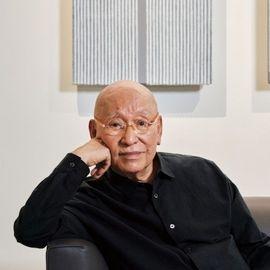
Park Seo-Bo
Park Seo-Bo

South Korean, b. 1931

Park Seo-Bo is a pioneering figure in Korean contemporary art and a key founder of the Dansaekhwa movement, a distinctive form of Korean monochrome painting that emerged in the early 1970s. Dansaekhwa represents a fusion of Western abstraction and traditional Korean aesthetics, grounded in meditative repetition and material sensitivity. Though it was never formalized through a manifesto, artists associated with the movement—such as Chung Chang-Sup and Lee Ufan—are united by a restrained color palette (typically white, beige, and black), a tactile engagement with materials like hanji paper and canvas, and a labor-intensive, process-driven methodology that often borders on ritual.In Park Seo-Bo’s oeuvre, discipline and repetition are paramount, reflecting a deep philosophical shift from his earlier involvement with art informel. This European movement, akin to American Abstract Expressionism, gained traction in Korea during the 1950s as artists sought new means of expression in the aftermath of the Korean War. In 1957, Park co-founded the Hyun-Dae Artists Association, promoting the gestural intensity of art informel as a cathartic response to national trauma. A UNESCO scholarship took him to Paris in 1961, where he immersed himself further in this idiom. His early Primordialis series—marked by violent brushwork, somber tones, and amorphous shapes—reflects the raw emotionality of that period.However, by the mid-1960s, Park turned away from Western paradigms and began embracing East Asian philosophies, particularly Taoism and Zen Buddhism. This shift catalyzed the development of his signature Écriture series, where rhythmic pencil lines or gestures are repetitively incised into still-wet paint, evoking meditative discipline and spiritual introspection.Park Seo-Bo has exhibited extensively at major institutions including Château La Coste in France; the National Museum of Modern and Contemporary Art (MMCA) and the Samsung Museum of Art in Seoul; the Museum of Fine Arts, Boston; the Langen Foundation in Germany; Tate Liverpool; the Brooklyn Museum in New York; and the Venice Biennale. His works are housed in prominent collections such as the DIA Art Foundation; the Guggenheim Museums in New York and Abu Dhabi; the Museum of Modern Art, New York; the Art Institute of Chicago; M+ in Hong Kong; and the Hirshhorn Museum and Sculpture Garden in Washington, DC.

Your Recent Searches