
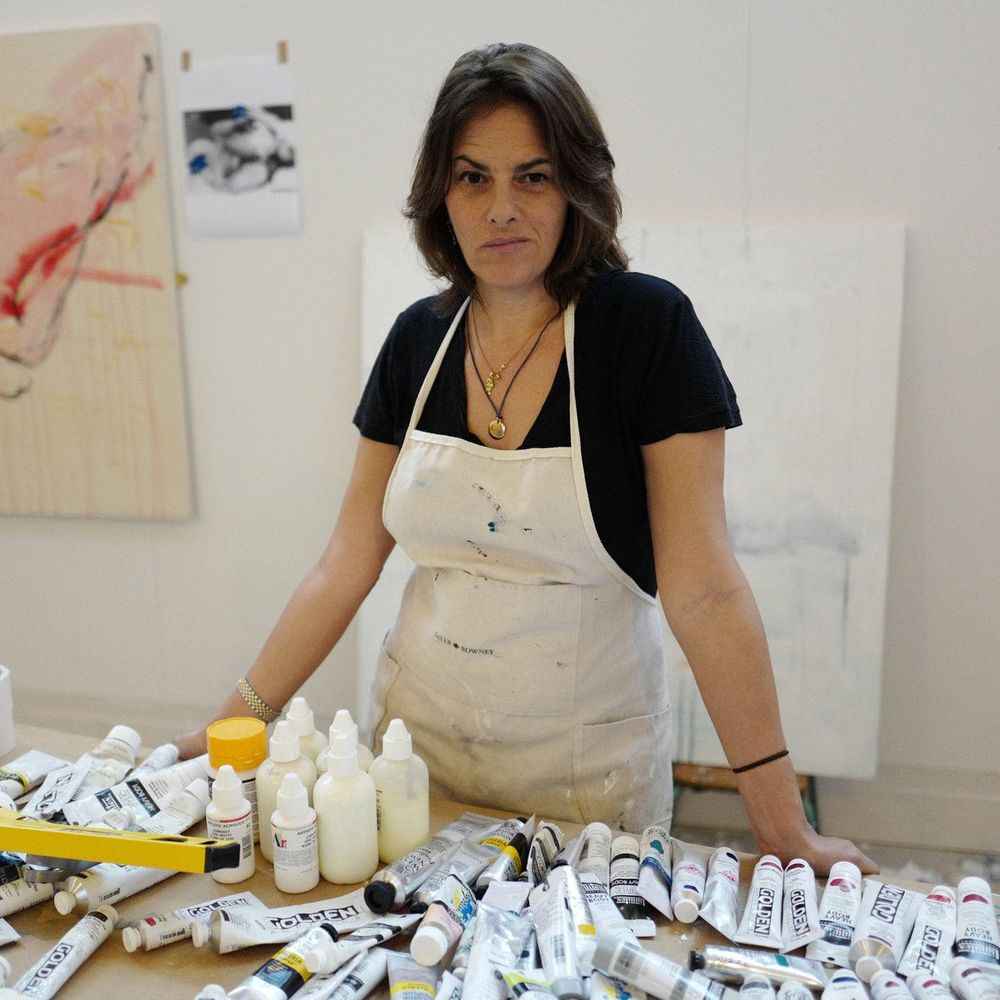



Tracey Emin is a British artist whose work draws directly from the intimate experiences, memories, and emotional landscapes of her own life. Using media as varied as drawing, needlework, sculpture, painting, neon, and installation, she creates pieces that are often raw, confessional, and unapologetically direct. Her narratives explore sexuality, trauma, desire, shame, and vulnerability with an openness that has sparked discussion since the beginning of her career. Emin spent her early childhood in Margate, where her Turkish Cypriot father owned a hotel, and the nostalgia and melancholy of the seaside town recur throughout her practice as symbols of longing, loss, and formative memory. Rising to prominence as part of the Young British Artists in the late 1980s, alongside figures such as Sarah Lucas and Damien Hirst, Emin helped redefine what contemporary art could be in Britain through works that confronted the personal and the political with equal force.
About Tracey Emin
Born in 1963, Tracey Emin studied at Maidstone College of Art before completing her MA at the Royal College of Art. She became one of the defining voices of the Young British Artists, a loose group whose boundary-pushing works shaped the cultural climate of the late twentieth century. Emin’s practice has always been grounded in autobiography, entwining memory, confession, and self-examination. Her early life in Margate, marked by instability and emotional upheaval, became a key source of imagery and emotional content in her works.
Her breakthrough exhibitions in the 1990s placed her at the centre of public debate. Emin’s ability to collapse the boundaries between art and lived experience reconfigured expectations around authenticity and the role of the artist’s voice. Over the years she has expanded her practice across painting, bronze sculpture, neon texts, and monumental public works, establishing herself as a major figure in British and international contemporary art.
Iconic Series and Artworks
Several works have become synonymous with Emin’s name due to their emotional power and cultural impact. My Bed, her Turner Prize nominated installation, presented her unmade bed surrounded by the debris of daily life, transforming private despair into a universal symbol of vulnerability. Another significant work, Everyone I Have Ever Slept With 1963–1995, took the form of a tent appliquéd with the names of people with whom she had shared intimacy, whether romantic, familial, or emotional.
Her neon text works, written in her own handwriting, are among her most recognisable pieces. These declarations of longing, heartbreak, and self-reflection extend her confessional style into luminous statements suspended in space. Emin’s drawings and paintings, often featuring solitary female figures, explore themes of desire, loss, and embodiment with gestural immediacy. More recent bronze sculptures reveal a shift towards reflection and resilience while maintaining the emotional candour central to her practice.
Artistic Techniques and Themes
Emin’s approach is distinguished by its immediacy and emotional intensity. She works across media with a consistent focus on narrative, using the physical act of making as a form of processing personal history. Her needlework pieces echo domestic craft traditions while subverting their associations through content that is often sexually explicit or emotionally raw. Her drawings, characterised by swift, expressive lines, offer a diaristic record of the human body and its emotional burdens.
Recurring themes include sexuality, trauma, longing, memory, and recovery. Her work often situates the female body as both subject and storyteller, exploring the tension between exposure and empowerment. Margate’s seaside landscapes and atmosphere serve as metaphors for formative experience, nostalgia, and the persistence of memory. Throughout her career, Emin has consistently challenged cultural norms around confession, female desire, and the legitimacy of personal narrative as artistic material.
Art Market and Investment
Tracey Emin’s market remains strong across multiple categories, including works on paper, neons, sculpture, prints, and major installations. Her most iconic early pieces are held in significant public and private collections, reinforcing her status as a key figure of late twentieth- and early twenty-first-century art. Works linked to her signature themes of intimacy and autobiography continue to resonate with collectors due to their cultural significance and emotional depth.
Her neons and works on paper are particularly sought after for their accessibility and recognisable style, while her larger sculptures and installations command higher prices and institutional attention. As a major figure associated with the Young British Artists movement, her work occupies an important place in contemporary art history, supporting long-term collector interest.
Authenticity and Provenance
Authenticity is crucial when collecting works by Tracey Emin, as her pieces span diverse media, each with specific documentation requirements. Many works are signed or issued with certificates, and provenance should trace back to reputable galleries, primary dealers, or recognised exhibitions. For neons, sculptures, and limited editions, original paperwork is especially important to confirm authorised fabrication and correct edition numbers.
Clear provenance provides security, preserves long-term value, and ensures the work aligns with the artist’s established catalogue. For guidance on checking authenticity or establishing provenance for a Tracey Emin artwork on FairArt, you can contact support@fairart.io for assistance.