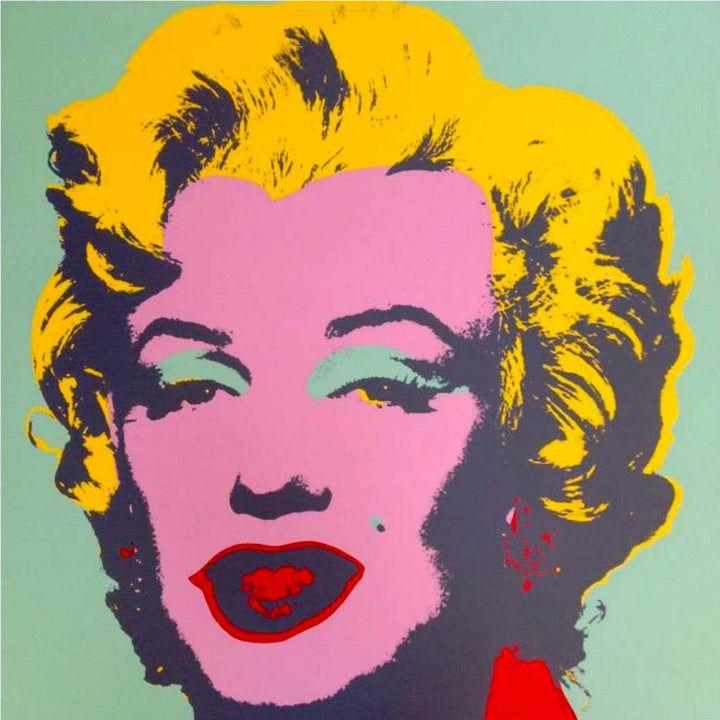
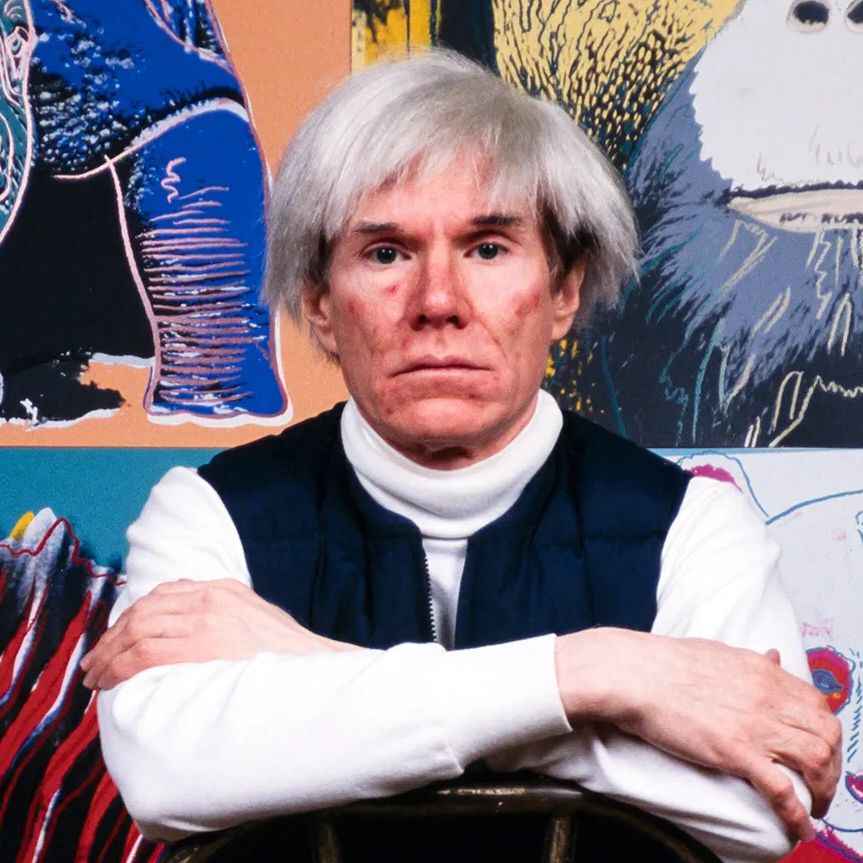


Renowned for his fascination with celebrity culture, consumerism, and image replication, Andy Warhol stands as one of the most influential figures in twentieth-century art. Drawing heavily from everyday life and mass media, he created some of the most recognisable images of the era. His iconic 32 Campbell’s Soup Cans, the Brillo Box sculptures, and his vivid portraits of Marilyn Monroe and Elizabeth Taylor reshaped the boundaries of fine art and popular culture. Rejecting traditional modes of painting and sculpture, Warhol embraced silk-screen printmaking to achieve the sharp lines and vibrant colours that became his signature. Beyond his own prolific output, he played a pivotal mentoring role for artists such as Keith Haring and Jean-Michel Basquiat, shaping the trajectory of contemporary art for generations. His legacy continues to echo globally through artists like Richard Prince, Takashi Murakami, and Jeff Koons. Exhibitions at major institutions including the Whitney Museum of American Art, the Museum of Modern Art, Tate Modern, and the Centre Pompidou affirm his enduring cultural impact, while his works have repeatedly achieved prices over 100 million dollars at auction.
About Andy Warhol
Andy Warhol was born in Pittsburgh in 1928 to a family of Slovak immigrants. After studying design at Carnegie Institute of Technology, he moved to New York in the late 1940s and first established himself as a leading commercial illustrator. His early success in advertising sharpened his interest in the language of branding, repetition, and surface, themes that would come to define his later fine-art practice.
By the early 1960s Warhol had transitioned fully into painting and printmaking, drawing imagery from consumer goods, tabloid newspapers, and Hollywood icons. His studio, the Factory, became a nexus of experimentation, celebrity encounters, and subcultural energy. Warhol’s deliberate blending of commercial aesthetics with fine art established him as a central figure of the Pop Art movement, challenging the distinction between high and low culture while redefining the purpose and process of artmaking.