


FairArt Guarantee
All artworks are covered. Get the item you ordered or your money back.
Before any work ships, our specialists verify its signature, numbering, edition details, provenance and any certificates. If anything doesn’t match, the sale is cancelled and you’re refunded in full under the FairArt Guarantee.
Whoever you buy from, you get the same checks, the same protection and the same team looking after you until the work is with you.
Every work is packed to our standards and sent by tracked express courier, fully insured in transit. You’ll see the exact shipping cost before you buy or make an offer.
Dispatch times vary depending on the nature of the work and how it needs to be packed. Once it’s on its way, you can follow every step with tracking updates by email and SMS, plus time-stamped proof of delivery.
Every work arrives as new, in the condition it was in when the artist or gallery first released it.
If anything isn’t as described when it arrives, let us know within 3 working days. We’ll arrange the return at the seller’s cost and refund you in full.
Have a question?
Have a question?
Additional Information
There are 2 ways to buy on FairArt - Buy Now or Make Offer.
There are 2 ways to Buy on FairArt
Learn more on our Buyer Page
2. Make Offer
Or, you can instead name your price by placing an offer.
If you hold the Highest Offer when the seller decides to Sell Now, your order will be confirmed automatically.
You can update or delete your offer anytime, free of charge, until it’s accepted.
There are 2 ways to sell on FairArt - Sell Now or List.
There are 2 ways to Sell on FairArt
Learn more on our Seller Page
1. Sell Now
If an interested collector has placed an offer on this work, you can sell it instantly at the ‘Sell Now’ price.
2. List
You can List this work for sale at a price of your choice.
If you hold the Lowest Listing (currently: £880) when a buyer decides to Buy Now, the sale will automatically be assigned to you.
You can update or delete your listing anytime, free of charge.
Artwork Specifications
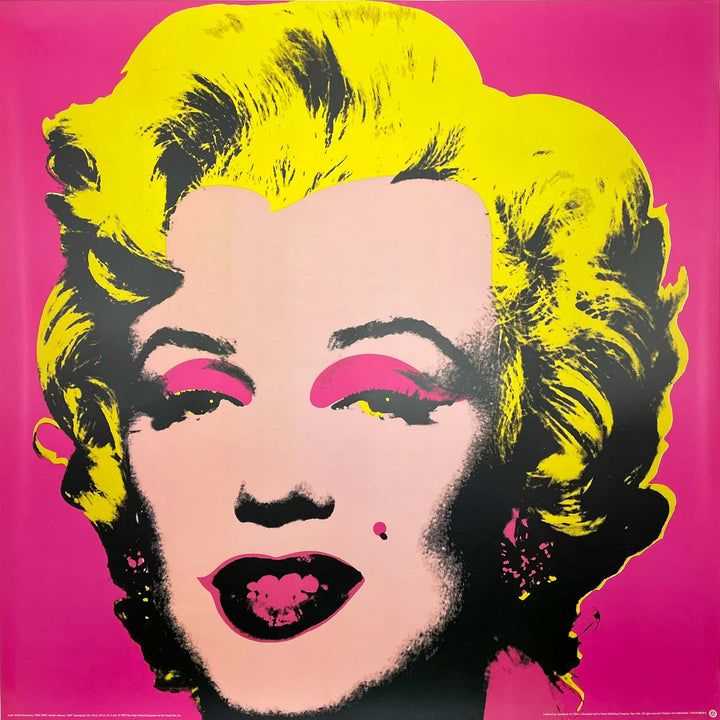
1993
Print - Offset Lithograph on semi-gloss thick fine art paper.
2,500
Specifications
1993
Print - Offset Lithograph on semi-gloss thick fine art paper.
2,500
About The Artist
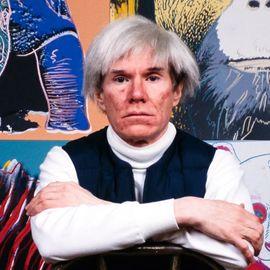
American, b. 1928
Renowned for his fascination with celebrity culture, consumerism, and image replication, Andy Warhol stands as one of the most influential figures in twentieth-century art. Drawing heavily from everyday life and mass media, he created some of the most recognisable images of the era. His iconic 32 Campbell’s Soup Cans, the Brillo Box sculptures, and his vivid portraits of Marilyn Monroe and Elizabeth Taylor reshaped the boundaries of fine art and popular culture. Rejecting traditional modes of painting and sculpture, Warhol embraced silk-screen printmaking to achieve the sharp lines and vibrant colours that became his signature. Beyond his own prolific output, he played a pivotal mentoring role for artists such as Keith Haring and Jean-Michel Basquiat, shaping the trajectory of contemporary art for generations. His legacy continues to echo globally through artists like Richard Prince, Takashi Murakami, and Jeff Koons. Exhibitions at major institutions including the Whitney Museum of American Art, the Museum of Modern Art, Tate Modern, and the Centre Pompidou affirm his enduring cultural impact, while his works have repeatedly achieved prices over 100 million dollars at auction.
Andy Warhol was born in Pittsburgh in 1928 to a family of Slovak immigrants. After studying design at Carnegie Institute of Technology, he moved to New York in the late 1940s and first established himself as a leading commercial illustrator. His early success in advertising sharpened his interest in the language of branding, repetition, and surface, themes that would come to define his later fine-art practice.
By the early 1960s Warhol had transitioned fully into painting and printmaking, drawing imagery from consumer goods, tabloid newspapers, and Hollywood icons. His studio, the Factory, became a nexus of experimentation, celebrity encounters, and subcultural energy. Warhol’s deliberate blending of commercial aesthetics with fine art established him as a central figure of the Pop Art movement, challenging the distinction between high and low culture while redefining the purpose and process of artmaking.