
From Canvas to iPad: David Hockney’s Digital Revolution
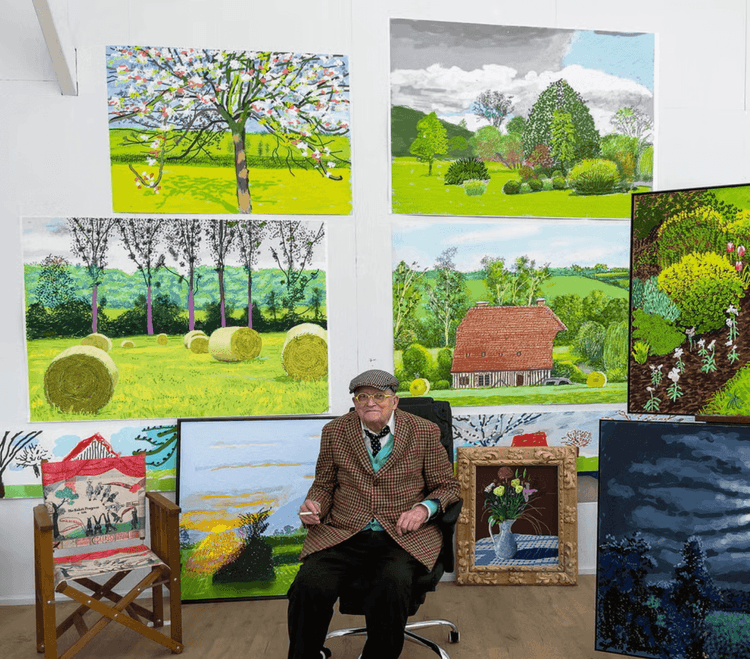
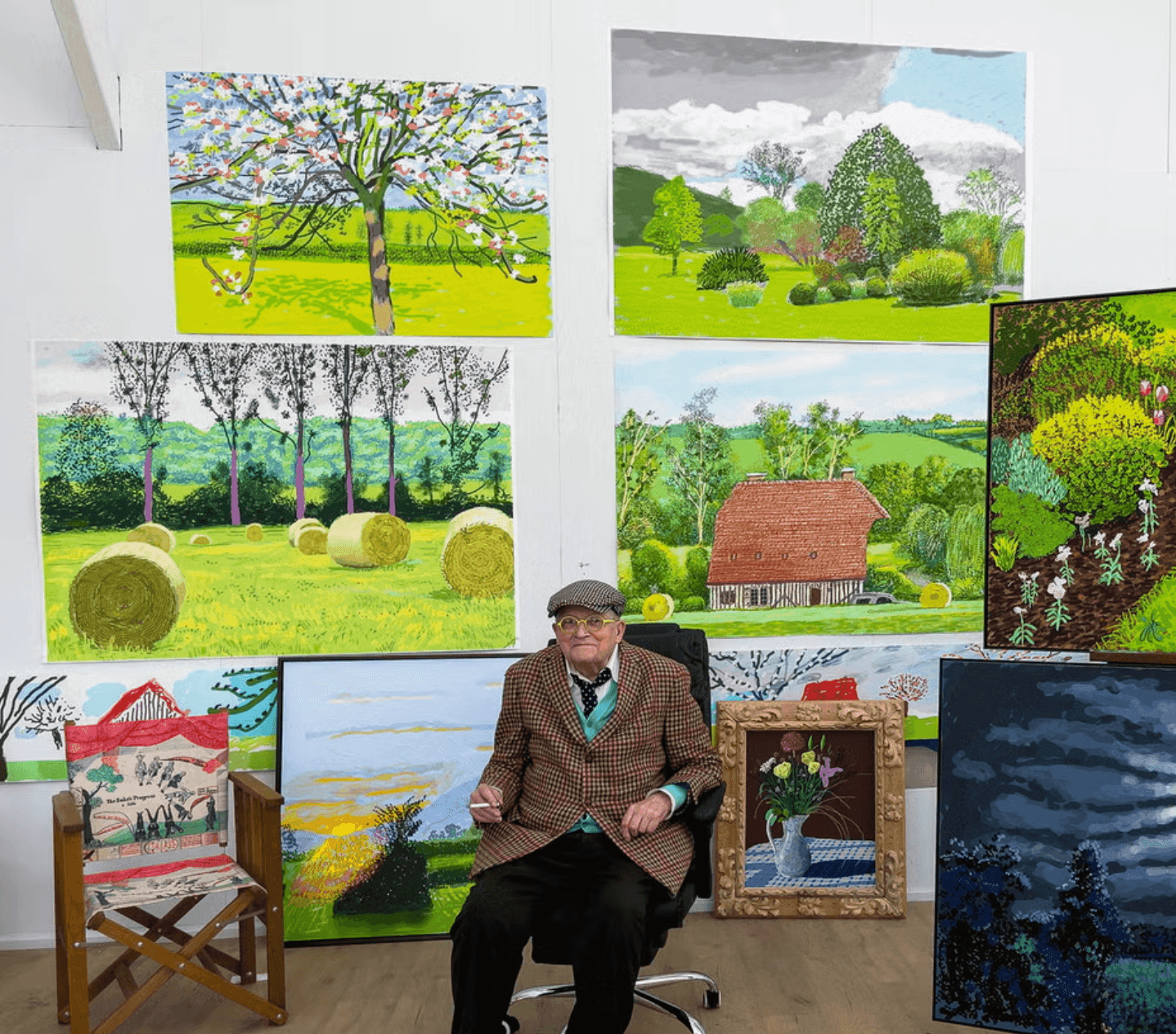
Engaging Technology as a Painter
A Radical Openness
David Hockney has always been an artist who has been open to change. He has wanted to use various tools to enhance his artistic language that have included photography in the 1980's, photography and new forms of printmaking; so transitioning to digital art was less abandonment of his history but a continued exploration that spanned his life.
The iPhone and iPad Years
Hockney started drawing on his iPhone in 2008, quickly realizing that the iPhone offered immediacy that other mediums did not. With the introduction of the iPad in 2010, Hockney began expanding the iPhone experiments into larger, more complex digital paintings that focused on many subjects, including personal portraits to expansive landscapes, using the Brushes app to make his drawings.
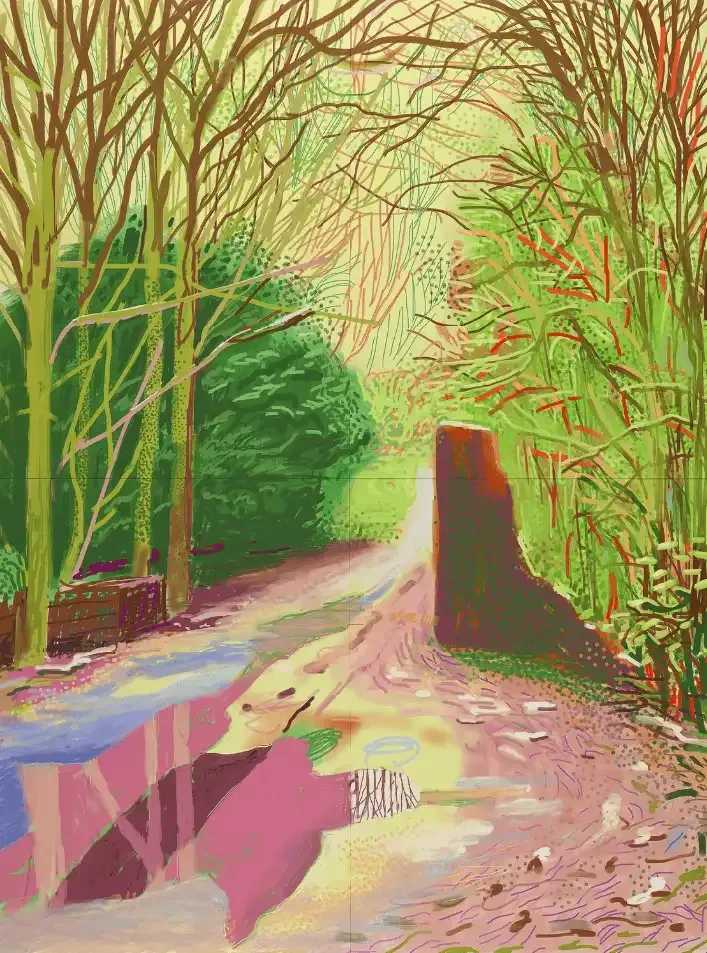 A limited edition version of this work is available to buy or sell here on FairArt.
Why Digital Suited Hockney
Speed and Spontaneity
For Hockney, the iPad offered a way to draw/paint faster than any other medium. He could draw a sunrise in real time, capturing and experimenting with light and colour as it unfolded right in front of him, and send the finished drawing to friends or collaborators instantly. This new digital immediacy, while challenging traditional painting, engaged a plein air, here and now temporality that embraced 21st century connectability.
Colour Without Limit
The digital medium also offered Hockney limitless color possibilities. Free from the materials of paint, he layered, erased and worked with a flexibility previously undone that could push his compositions in unpredictable new directions.
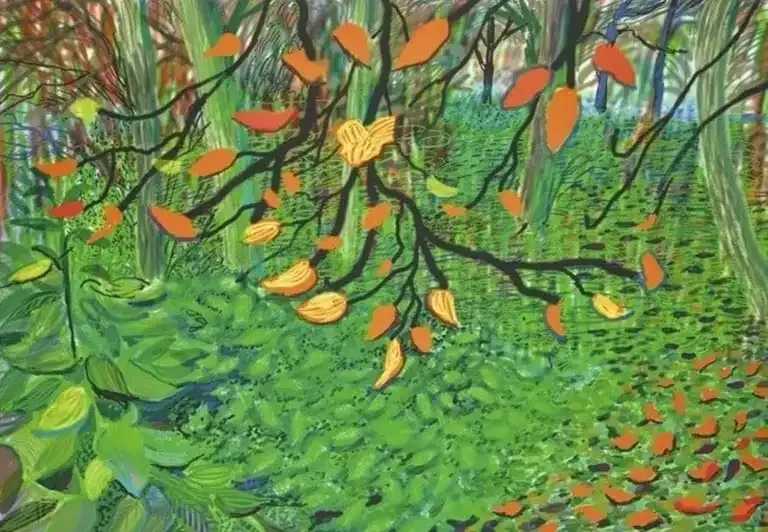 A limited edition version of this work is available to buy or sell here on FairArt.
Major Digital Works and Exhibitions
The Arrival of Spring
The Arrival of Spring is one of David Hockney's favourite digital series created while living in Yorkshire, England. Created on iPads, the digital works captured the seasonal transformation of nature with neon yet luminous colours, contrasting strokes, and energetic gestures of colour giving emotional resonance to his digital practice. Hockney illustrated that digital devices are imaginative tools that can achieve atmospheric experiences as existential with paint.
A Bigger Picture
In his 2012 exhibition, A Bigger Picture, first at the Royal Academy, Hockney exhibited both his vast, traditional landscapes and his iPad drawings. By exhibiting them together he emphasised that digital works are not more modest but we can consider them as validly disparate extensions of painting.
David Hockney, The Arrival of Spring in Woldgate East Yorkshire, 2011 | © David Hockney
Reimagining the Exhibition Experience
Virtual Installations
Hockney has so far engaged technology, and digital media not just to create art but for the presentation of the art as well. A few exhibitions showed his iPad works on screens as scrollable images allowing the works to cycle throughout the complete process of creation. Drawing became a performance and the viewer became a witness.
Accessibility and Sharing
While traditional media such as painting, photography, and printmaking are mediums that control access to art, digital mediums would allow his art to be freely accessible to the world, globally shared as an extension of Hockney's democratic belief that art should be egalitarian and not intended as the exclusive privilege of few.
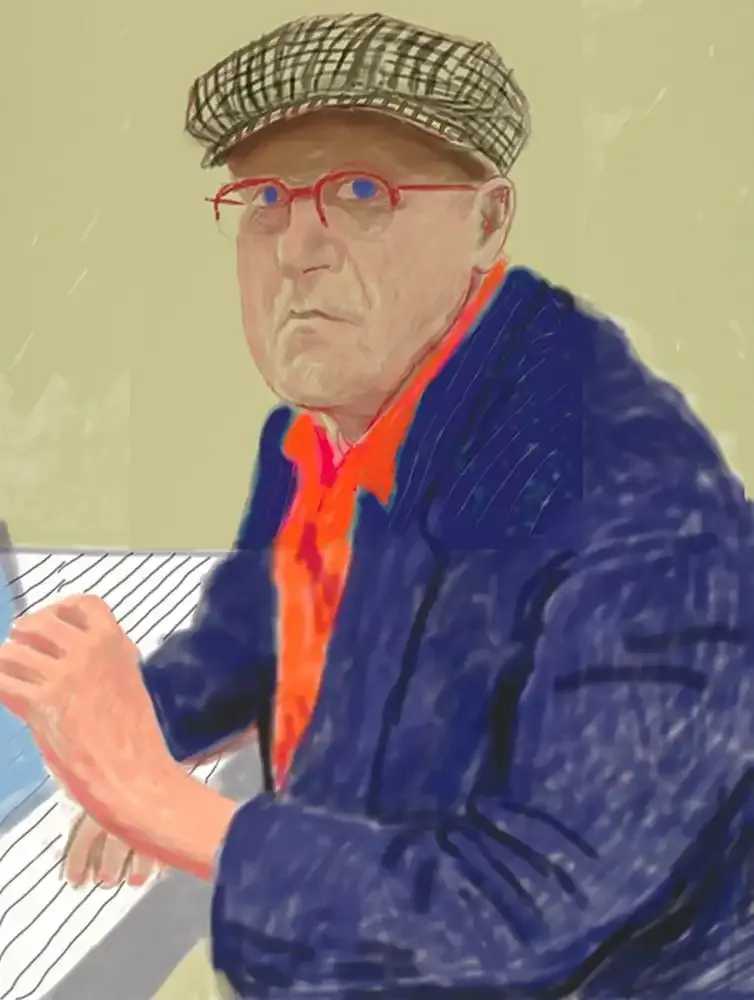 A limited edition version of this work is available to buy or sell here on FairArt.
The Impact of Hockney's Digital Vision
Challenging Tradition
By engaging the iPad, Hockney challenged the notion that digital art lacks legitimacy as a secondary form of painting, instead, he conveyed the concept that it was a continuation of artistic development over centuries from oil paint to the invention of the camera.
A Painter of All Time
Hockney's digital works demonstrate that great artists will adapt as artists during their eventual times. Similar to his California pool paintings expressing the optimism of the 1960's, his iPad drawings demonstrate the immediacy, and connectedness of the 21st century - engaging both traditionalist and the trailblazer.