David Shrigley|Really Good (Fourth Plinth)
All Really Good (Fourth Plinth) Works By David Shrigley (1)
Significance & Analysis
'Really Good' took a simple idea from Shrigley's drawings to a plinth in the middle of Trafalgar Square, and this multiple is the version made to be taken home. It brings a public monument back down to the scale at which the joke began.
A proposal for optimism
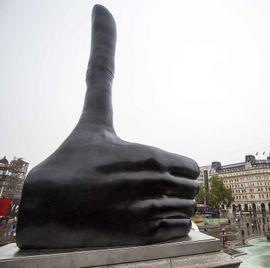
The Fourth Plinth in Trafalgar Square was built in 1841 for a statue of William IV that was never funded. The Mayor of London's programme commissions contemporary works for it, and 'Really Good' was the eleventh. It was unveiled on 29 September 2016 by the Mayor, Sadiq Khan.
Shrigley framed the work as a proposal. If everything is declared good, he suggested, the claim might act as a self-fulfilling prophecy, nudging the economy, the weather and society towards something better. He has called the work "both ironic and sincere at the same time." Unveiled three months after the EU referendum, it was quickly read in the light of Brexit, although the commission process had begun years before the vote. His answer to that reading was blunt: "it means whatever you want it to mean, but it doesn't mean that."
From bronze to polystone
The multiple was made in 2016 to mark the commission. It was sold alongside a range of 'Really Good' merchandise that raised money for the Fourth Plinth programme and its Schools Awards, and it was stocked at venues such as Yorkshire Sculpture Park.
It keeps what makes the sculpture work: the clenched hand and the thumb stretched far beyond natural proportion. In Trafalgar Square, the thumb gave its verdict to the whole city from among the square's older bronze statues. On a desk or shelf, the same gesture becomes a private vote of approval.
How Big Is the Really Good Multiple and How Is It Numbered?
Why Does the Thumb Look So Long?
How Was the Original Really Good Sculpture Made?
Where Did the Original Really Good Sculpture Go After Trafalgar Square?
David Shrigley Series