




Artwork Series





Buy & Sell Gerhard Richter Art
About Gerhard Richter
Dresden, Düsseldorf and Capitalist Realism
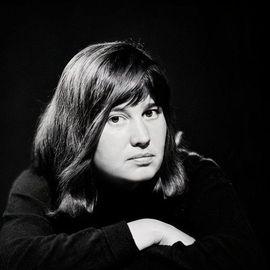
Richter was born in Dresden in 1932 and studied at the city's art academy in the early 1950s, where his main subject was mural painting. In 1961 he left East Germany for Düsseldorf and enrolled again as a student, this time at the Kunstakademie, where Karl Otto Götz was among his teachers. Two years later he and three fellow students, Sigmar Polke, Konrad Lueg and Manfred Kuttner, began showing together as Capitalist Realism, a grouping that did not last long. His first solo exhibitions followed in 1964, at Galerie Schmela in Düsseldorf and Galerie René Block in Berlin.
He went back to the Düsseldorf academy as a professor in 1971. In 1983 he moved to Cologne, where he still lives and works.
Painting from photographs
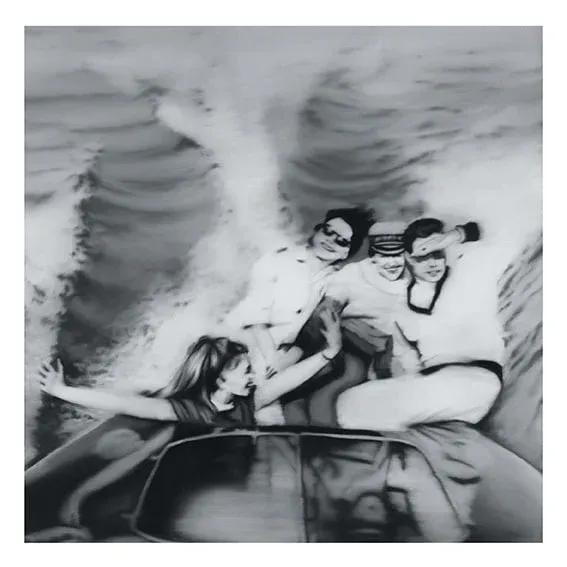
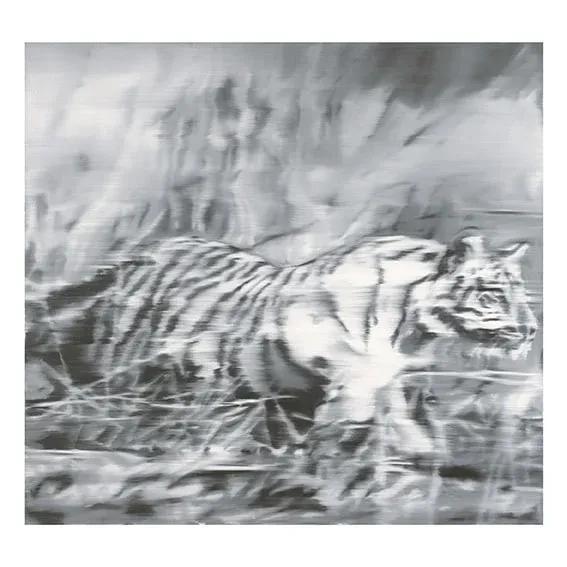
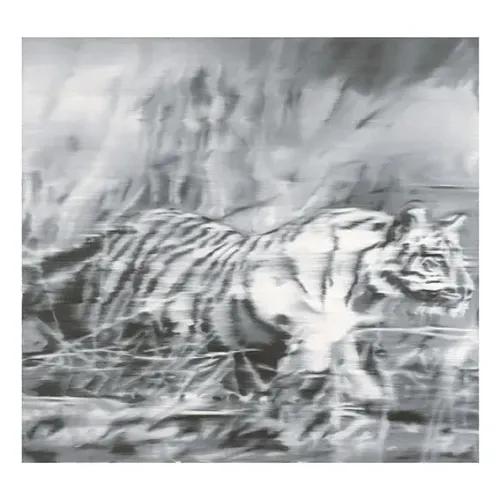
From the early 1960s Richter painted from photographs rather than from life. The sources were often ordinary: personal snapshots, magazine pages, news images. Woman Descending the Staircase (1965), now at the Art Institute of Chicago, shows the method that made these pictures recognisable. He transferred a found photograph onto canvas and, while the oil was still wet, pulled a dry brush through it, so the figure seems to slip out of focus.
The photographic source stayed central for decades. It runs through portraits such as Ema (Nude Descending a Staircase) (1966) and Betty (1988), and through October 18, 1977 (1988), a cycle of fifteen black-and-white paintings made from press photographs of the Baader-Meinhof group. In many of these canvases the blur, the cropping and the grey or black-and-white palette keep the look of the source photograph.
The squeegee and the Colour Charts
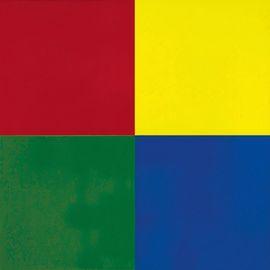
Colour set out by a system rather than chosen by taste runs through his work from 1966, the year of the first Colour Chart, up to the glass works and the window he designed for Cologne Cathedral.
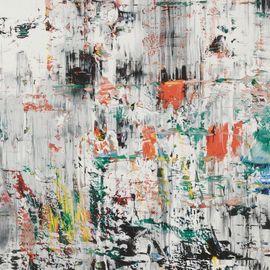
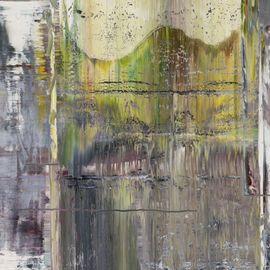
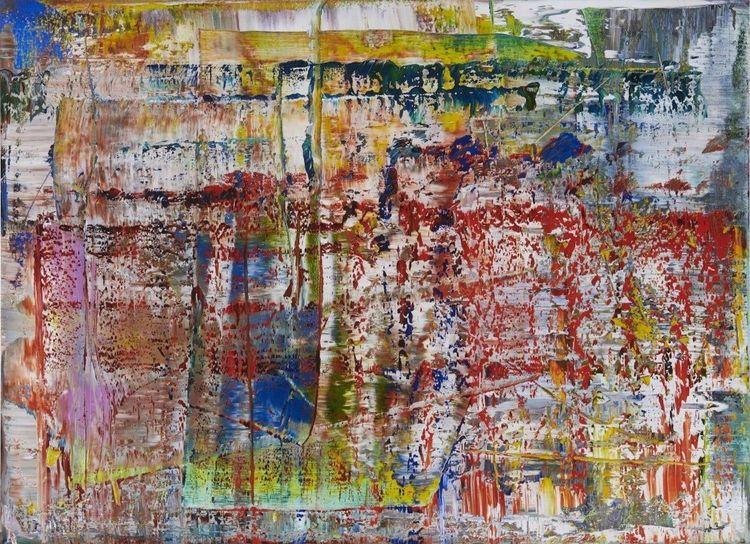
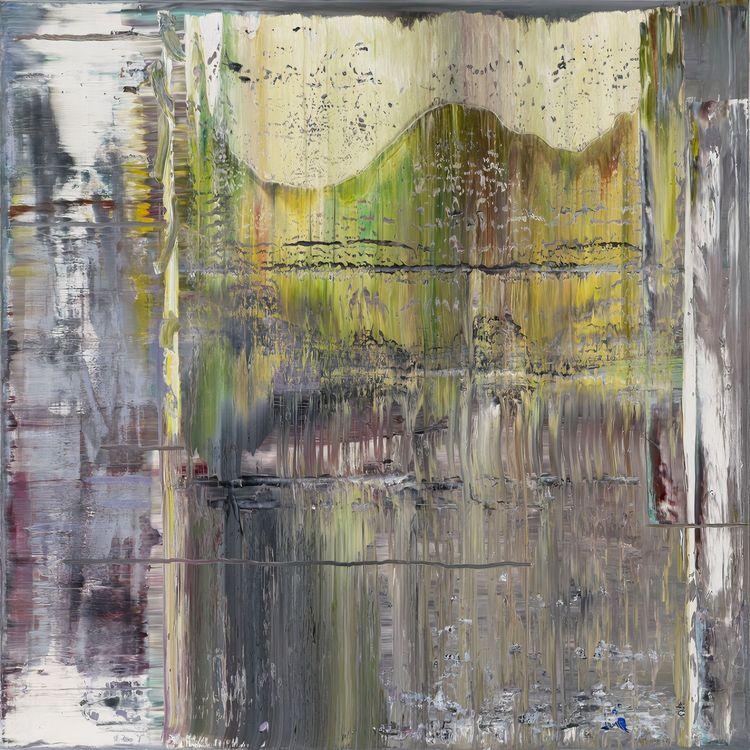
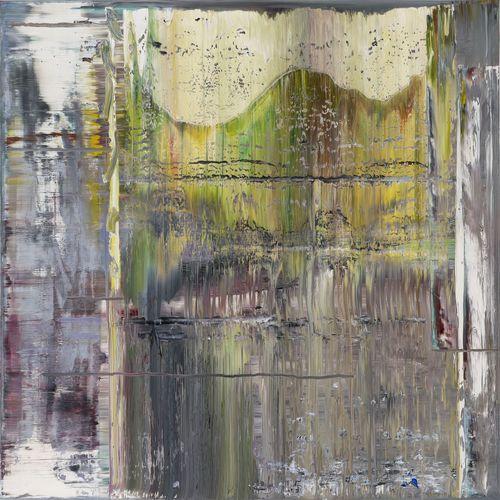
The abstract paintings most closely associated with his name today were made with a squeegee, a length of flexible Perspex fitted to a wooden handle. Tate's conservators describe how he often laid down a detailed underpainting, covered it with heavy oil paint and dragged the blade across, sometimes in one long horizontal pass and sometimes in quick vertical strokes that ripple the surface. Layers dried at different speeds, and he cut, scraped and peeled them with a palette knife, so earlier stages of the picture break through. Most of these canvases share the title Abstraktes Bild (abstract picture) and are told apart by number. By the 1990s the squeegee works had reached a monumental scale, and the six Cage paintings of 2006 belong to the same practice.
He has also worked on glass and mirrors, from Mirror Painting (Grey, 735-2) (1991) to 11 Panes (2004).
Birkenau and the later work
Birkenau (2014) brings the two approaches together: four large abstract paintings based on photographs taken at Auschwitz-Birkenau. The cycle is the centre of 100 works the Gerhard Richter Art Foundation placed on long-term loan with the Neue Nationalgalerie in Berlin, where they went on show in April 2023. In 2024 a pavilion dedicated to the paintings opened at the International Youth Meeting Centre in Oświęcim, Poland.
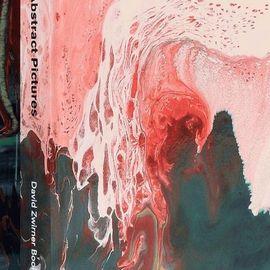
Editions have run alongside the paintings since the mid-1960s, first as offset prints and multiples and later as photographic facsimiles of particular paintings, including the Cage and Flow pictures.
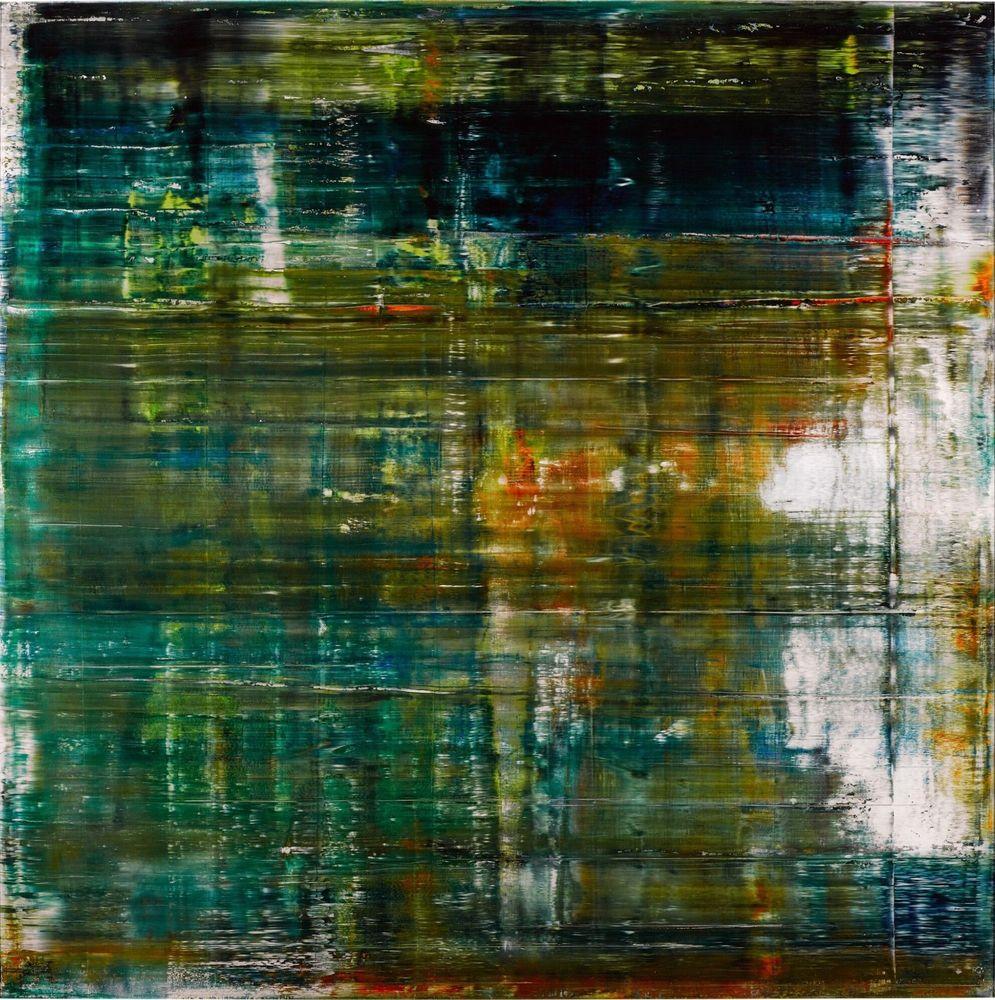
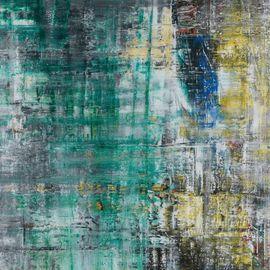
Cage (P19 1) (2020)
Collector & Guidance
Buying a Gerhard Richter
The first question with any Richter is which of four quite different objects you are looking at: a unique work, an edition catalogued from the 1960s to 2013, a HENI facsimile, or a recent offset print. A single composition may exist as two or three of them, and each needs its own checks.
Paintings and overpainted photographs
Unique paintings carry the number Richter assigned them, usually shown in brackets after the title, as in Abstraktes Bild (649-2). Confirm that number and make sure the dimensions, date and medium agree with the published record for it. His overpainted photographs are also unique: small photographic prints with oil paint applied directly to the surface. For both, ask for a provenance that leads back to the studio, one of his galleries or a documented sale, together with invoices and exhibition history.
Editions up to 2013
Editions from 1965 to 2013 each have a number in the catalogue raisonné of his editions (the Butin number), and a listing should quote it. Check how the sheet is signed, because practice varies within his output: Elizabeth I is signed, titled and dated in pencil, while the 2,000 copies of Victoria I carry a printed signature. Edition sizes range from a few dozen to thousands. Proofs also exist outside the numbered run (Kerze I (Candle I) has two unsigned proofs alongside its edition of 250), so a sheet without a number is not automatically suspect, but it must be identified as what it is.
HENI facsimiles
HENI's P editions reproduce specific paintings photographically and are numbered with a P code, such as Flow (P16) or the six Cage prints of P19. They are not signed. The edition number sits on a label on the back, with the publisher's stamp, so the label is the main document and should be intact and legible. Both the Flow and the Cage facsimiles are face-mounted behind acrylic glass on aluminium panels. The acrylic face marks easily, so request photographs taken at a low angle across the surface and look closely at the corners for knocks.
Recent offset prints
A large number of offset prints made in recent years reproduce paintings from earlier decades, some on paper and some on aluminium. Check whether a print is signed by hand, signed in print or unsigned, whether it is numbered, and who published it, before comparing it with anything else. These details decide which market a print belongs to.
Selling a Gerhard Richter
Begin by giving the identifying reference for the object type, so a buyer can check the work against its published record. For a painting, that is its title with the bracketed work number; for an edition up to 2013, the Butin catalogue number; for a HENI facsimile, the P code and the edition number from the label.
Photograph the front and the back. On a work on paper, show the signature and any date or inscription close up, and state whether the signature is in pencil or printed. On a HENI piece, photograph the label and stamp on the reverse so the number can be read, and photograph the acrylic face at an angle to show its condition. For proofs, include whatever marking or documentation identifies the sheet as a proof.
Add the full dimensions, the medium as described by the publisher, and any gallery invoice, exhibition label or previous sale record. For a unique work or an overpainted photograph, set out the chain of ownership as far back as you can document it.
Recognition
- Work held in the collection of Tate, London, including 48 Portraits (1971–98).
- Golden Lion at the 47th Venice Biennale, 1997.
- Praemium Imperiale for painting, awarded by the Japan Art Association, 1997.
- Retrospective of 275 works from 1962 to 2024 at the Fondation Louis Vuitton, Paris, 2025–26.
- Retrospective Gerhard Richter: Panorama at Tate Modern, London, 2011, organised with the Neue Nationalgalerie, Berlin, and the Centre Pompidou, Paris.
- Survey exhibition Gerhard Richter: Forty Years of Painting at the Museum of Modern Art, New York, 2002.
- Sole artist representing Germany in its pavilion at the 36th Venice Biennale, 1972.
- Represented by David Zwirner since 2023.
Market & Collectability
Prices for Richter depend less on the picture than on what it is printed or painted on and how it was issued. One image can exist as a unique painting, a hand-signed edition and an unsigned facsimile, each with its own price range, so a work is only fairly compared with others of the same type and edition. Unique paintings sit at the top. Abstraktes Bild (599) (1986), a large squeegee abstraction in oil on canvas, sold for £30.4 million at Sotheby's London on 10 February 2015, among the highest prices recorded for his work at auction. The photo-paintings reach the same level: Domplatz, Mailand (1968), a view of Milan's cathedral square, made $37.1 million at Sotheby's New York on 14 May 2013.
Editions open the market far wider. Elizabeth I (1966), an offset print signed and dated by hand, from an edition of 50, sold for £37,800 at Phillips London on 13 October 2022. Kerze I (Candle I) (1988), a signed colour offset print from an edition of 250, made €25,080 including premium at Van Ham in Cologne on 29 November 2023. Among the unsigned facsimiles published by HENI, Cage (P19 4) (2020), a 100 x 100 cm giclée print face-mounted under acrylic, from an edition of 200, sold for €13,200 including premium at Van Ham on 3 December 2025. Lower down, Victoria I (1987), a colour offset print from an edition of 2,000 with the signature printed rather than written, sold for €1,980 including premium in a Van Ham online sale on 26 January 2023.
NOTABLE AUCTION RESULTS
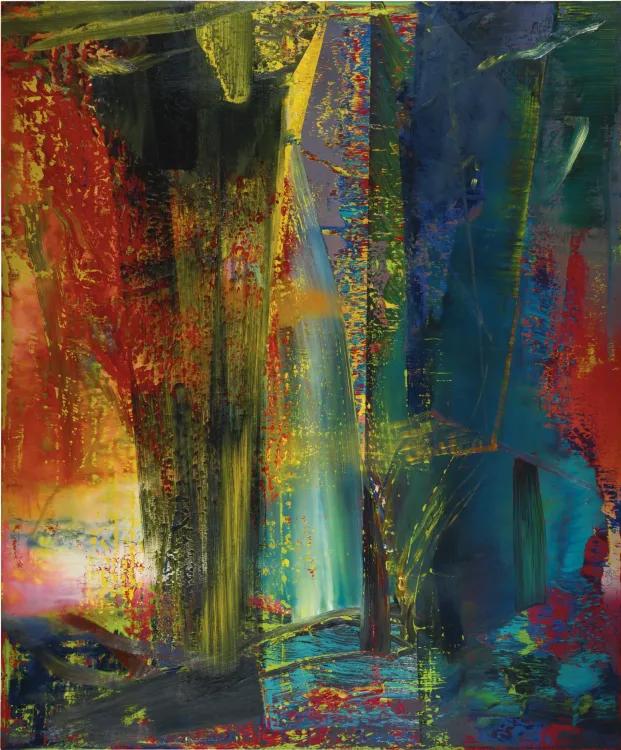
Abstraktes Bild (599), 1986 | Sotheby's London