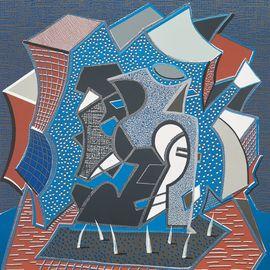
David Hockney|Drawing in a Printing Machine (Computer Drawings)
All Drawing in a Printing Machine (Computer Drawings) Works By David Hockney (15)
Significance & Analysis
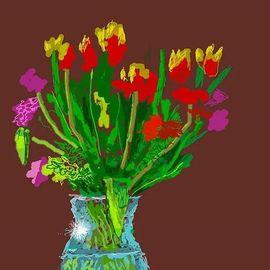
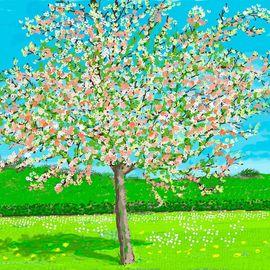
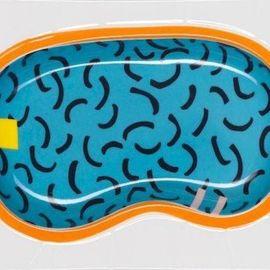
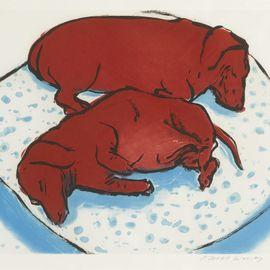
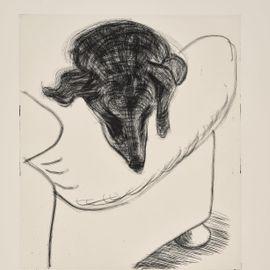
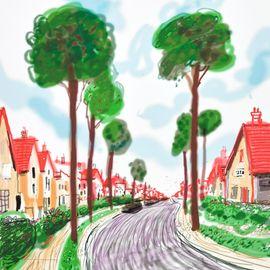
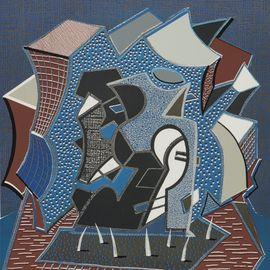
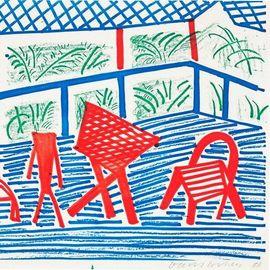
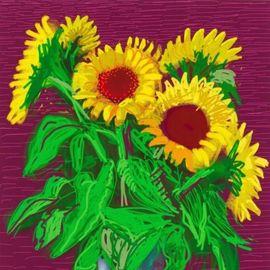
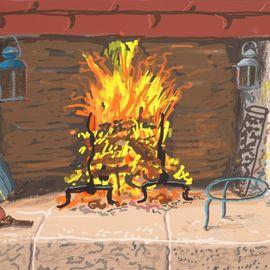
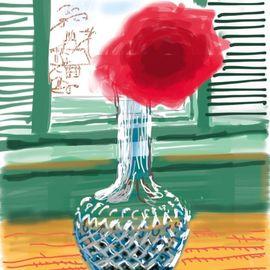
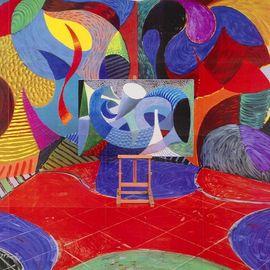
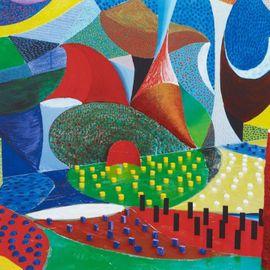
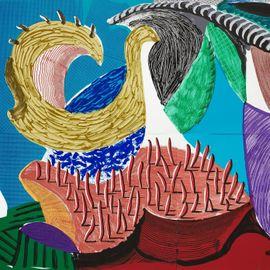
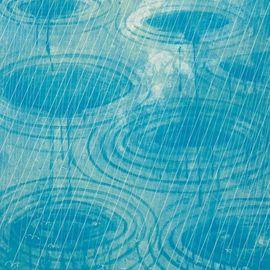
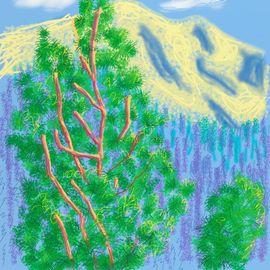
In 2008 Hockney found that a computer could at last keep pace with his hand, and these prints are the result of this discovery. He had once thought it too slow for a draughtsman. Working in Photoshop with a stylus on a tablet, he watched the sitter and the screen at the same time. "The speed allowed here with colour is something new," he said with a sense of excitement.
Made to be printed
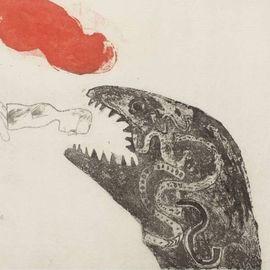
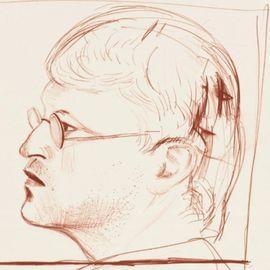
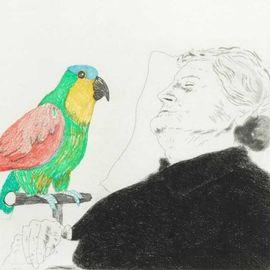
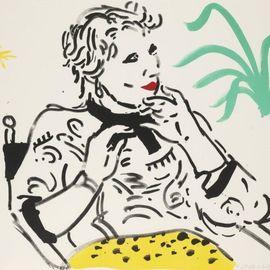
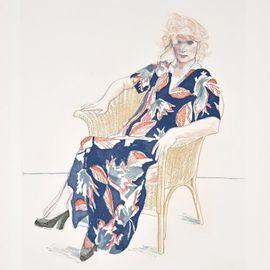
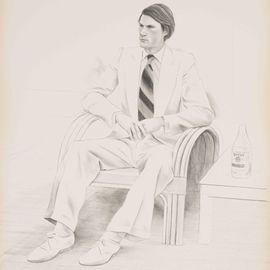
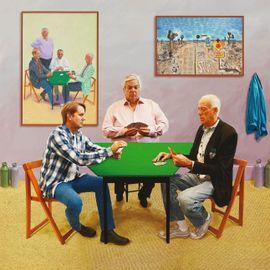
Each drawing existed only in the computer until it was printed, so the print is the work, not a copy of one. Hockney was clear that "They are not photographic reproductions", and he called Photoshop "a computer tool for picture making". Many of the sheets are large: the portraits mostly measure 124.5 x 85.1 cm, 'Less Trees Near Warter' stands 237 centimetres tall on an aluminium support, and 'A Bigger Green Valley' runs more than two metres across two panels.
Roads and sitters
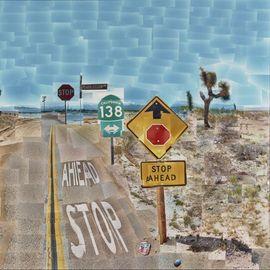
The landscapes came out of the East Yorkshire Wolds, where Hockney was then painting outdoors on a large scale. He drew the roads around Kilham in summer and winter, autumn trees near Thixendale and the streets of Bridlington. The portraits, made in his Bridlington studio, recall the watercolour portraits he had painted earlier. His sister Margaret sat for him, as did Peter Goulds of the Los Angeles gallery L.A. Louver. L.A. Louver showed the prints first, from February 2009. Annely Juda Fine Art in London followed in May with a solo exhibition of 10 landscapes and 18 portraits, and in November 2009 the UK Government Art Collection bought a copy of 'Winter Road Near Kilham' from the gallery.
At auction
In April 2022 'Matelot Kevin Druez 2' made $85,680 with fees at Phillips New York, and in January 2023 'Cardigan Road' made £52,920 with fees at Phillips London. Earlier, in June 2021, 'A Bigger Green Valley' had sold for £308,700 with fees at Phillips London.
Before and after
The computer drawings followed several years in which Hockney had used digital photography to plan his largest Yorkshire paintings. Next came drawings on the iPhone and, from 2010, on the iPad, the start of his 'iPad Drawings'.
What Are the Edition Sizes of Drawing in a Printing Machine (Computer Drawings)?
Why Is the Series Called Drawing in a Printing Machine?
How Is Rain on the Studio Window Different From the Other Prints?
How Do the Computer Drawings Differ From Hockney's iPad Prints?
David Hockney Series