David Hockney|Eine, Deux, Très
All Eine, Deux, Très Works By David Hockney (3)
Significance & Analysis
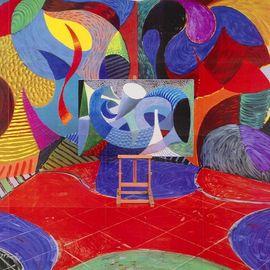
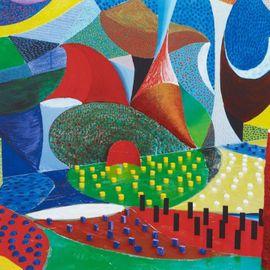
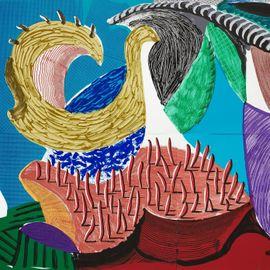
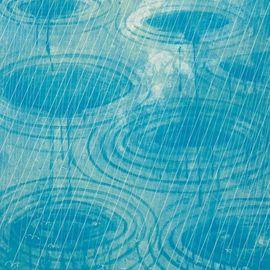
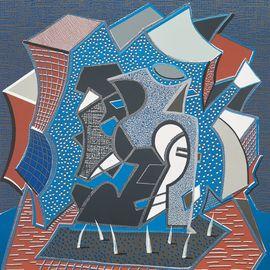
Hockney (1937–2026) made these lithographs in the years he was designing for the opera, and they are often linked to that work. Their titles count off the set in a mix of languages, with English subtitles that run from 'First Part' through 'Second Part' to 'End Of Triple'.
Stage, river and grass
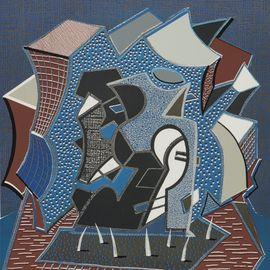
In 1990 Hockney was planning Puccini's 'Turandot' for Chicago, and in 1991 the Royal Opera House in London commissioned his designs for Richard Strauss's 'Die Frau ohne Schatten'. His first model for that production was an abstract river shaped like a snake, dotted with marks taken from the textures of his paintings. The imagery of the three prints is usually read as grass, scrub and water. In the deep blue 'Deux - Second Part', the strip of ground is a dense bed of blue and white strokes, while in 'Très (End Of Triple)' it becomes a rust-red band crossed by white marks.
The editions
Colour lithographs like these are printed from a separate plate for each colour, inked and pressed onto the sheet in turn. 'Eine - First Part' needed 13 aluminium plates. The sheets are large for prints, about 123 x 91 cm, with an image of about 113 x 80 cm and wide margins, on Rives BFK paper. Each carries the Tyler Graphics blindstamp. The Walker Art Center in Minneapolis received all three in 1992 with its Tyler Graphics Archive, and Tate's collection also holds the set.
Before and after
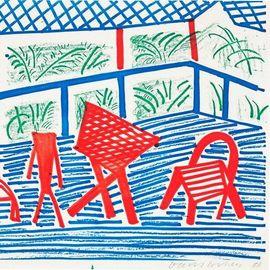
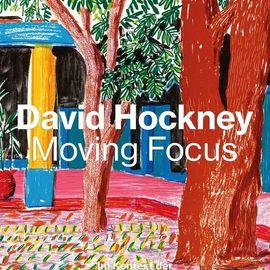
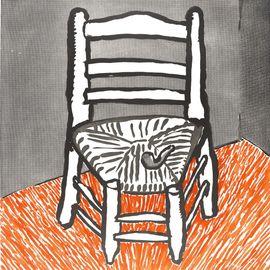
Before these prints, Hockney made the 29 'Moving Focus' prints with Tyler Graphics between 1984 and 1986, with chairs, rooms and portraits among their subjects. In 1990 and 1991 the workshop also published the lithographs of 'Tyler Graphics Lithographs (1990–91)', among them 'The Wave (Lithograph)' and 'Twelve Fifteen'. Two years later Gemini G.E.L. in Los Angeles published his 'Some New Prints' (1993), some of which add screenprint to lithography.
Were All Three Lithographs Published in the Same Edition Size?
How Did Hockney Sign the Eine, Deux, Très Prints?
What Distinguishes the Three Prints From One Another?
Do Prints Offered Together Share an Edition Number?
David Hockney Series