David Hockney|The Blue Guitar
All The Blue Guitar Works By David Hockney (19)
Significance & Analysis
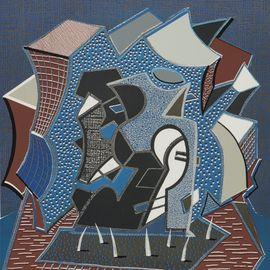
In 'The Blue Guitar' Hockney turned his admiration for Picasso into a whole portfolio of colour etchings, and he reached him through a poem rather than a painting. The curator Henry Geldzahler, his close friend, had recommended the poem to him on Fire Island. Of reading it aloud, Hockney said: "I loved it even more, because I got the music that it has."
From poem to plates
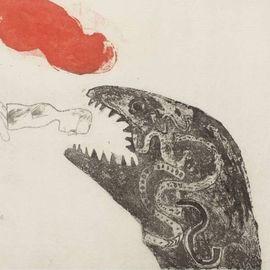
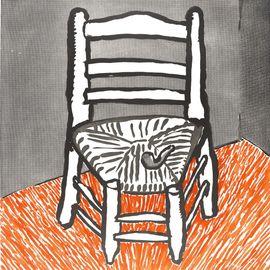
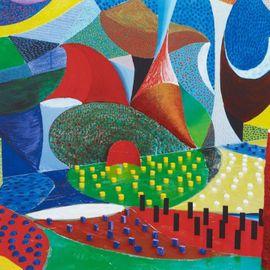
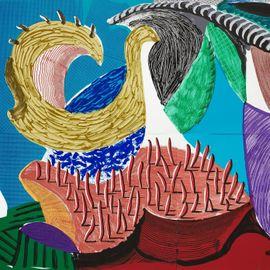
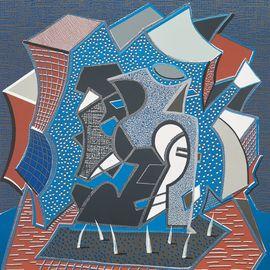
Hockney first worked out the images as drawings in coloured ink, then turned them into etchings over the autumn of 1976 and the spring of 1977. He described the prints as "an interpretation of its themes in visual terms" rather than literal illustrations. Pictures sit inside pictures, and plates set different phases of Picasso's style side by side, each told apart by colour. Some titles take phrases straight from the poem, as 'Tick It, Tock It, Turn It True' and 'It Picks Its Way' do.
How the etchings were made
Hockney had learned colour etching and sugar-lift aquatint in Paris from Aldo Crommelynck, the master printer who worked with Picasso. Each etching in 'The Blue Guitar' was printed from two copper plates, in combinations of red, blue, green, yellow and black, and 18 of the 20 use aquatint. Hockney made the plates in London with Maurice Payne, his printer at Petersburg Press.
At auction
The highest auction result for the series is £52,920 with fees, for a complete set in its original leather portfolio at Phillips in London in September 2022. In Phillips's dedicated David Hockney sale in London in September 2026, four single plates made £1,290 to £2,838 with fees, the top price going to an artist's proof of 'Made In April'.
Before and after
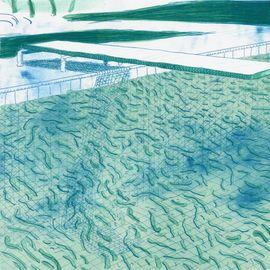
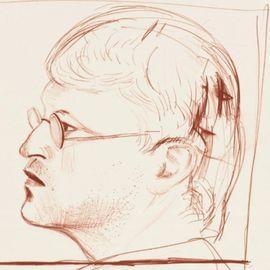
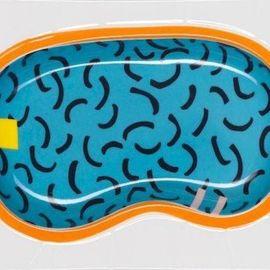
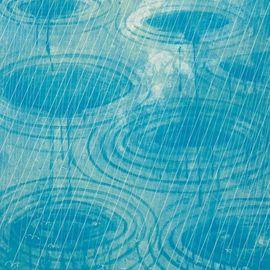
The series grew out of Hockney's 1973 tribute to Picasso, who died that year. In Crommelynck's Paris studio he etched 'The Student', drawn from a photograph of Picasso. 'The Blue Guitar' carried that homage into colour across a whole portfolio. In 1978 Hockney moved from etched line to massed colour in the 'Paper Pools', pictures in pressed coloured paper pulp made with the printer Kenneth Tyler.
How Many Proofs of The Blue Guitar Were Printed?
Are the Prints in The Blue Guitar Signed?
What Should a Complete Set of The Blue Guitar Include?
Why Is the Series Called The Blue Guitar?
Is The Blue Guitar Book the Same as the Etchings?
David Hockney Series