Damien Hirst|For The Love Of God
All For The Love Of God Works By Damien Hirst (6)
Significance & Analysis
These prints turned a single object of value into editions of hundreds. The sculpture they depict is a one-off made from platinum and diamonds; the prints give it a second life as images, and the large-format ones carry a trace of its material in the form of diamond dust. In doing so they created an accessible market around an inaccessible, one-of-a-kind piece.
The skull itself
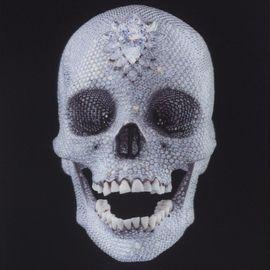
'For the Love of God' is a life-size platinum cast of an eighteenth-century human skull, bought from a London taxidermist. Its 32 platinum plates hold 8,601 diamonds weighing 1,106.18 carats, with a 52.4-carat pink diamond at the front of the cranium. The teeth are the original skull's own. Radiocarbon dating places the skull between 1720 and 1810, most likely a man of about 35.
The sculpture was first shown in 'Beyond Belief' at White Cube in London in 2007, where it was reported as sold for £50 million. It has since travelled widely, from the Rijksmuseum in Amsterdam in 2008 to Tate Modern in 2012. It works as a memento mori, a reminder of death, while making its cost impossible to ignore.
From object to print
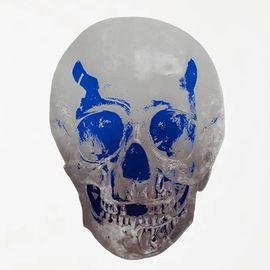
The large prints are the closest to the sculpture. 'For The Love Of God, The Diamond Skull' and 'For The Love Of God, Laugh', both 2007, are 100 x 75 cm screenprints with glazes and diamond dust, each in an edition of 250. 'For The Love Of God, Enlightenment' joined them in 2014 in the same edition size. The sheets are flat: the photographic image records every facet of the stones, and the diamond dust adds a real glitter on top of it.
At auction
The strongest result of the past five years came in December 2021, when 'For The Love Of God, Enlightenment' made a hammer price of £15,000 at Bonhams in London. Prices have eased since. In October 2024, 'For The Love Of God, The Diamond Skull' fetched $5,334 at Phillips New York, including buyer's premium.
The most exceptional sale came earlier. In March 2019 a copy of 'For The Love Of God, Believe' from the collection of the singer George Michael sold for £62,500 at Christie's in London. It is a small print from a large edition, one that usually sells for a few thousand pounds at most. The sale followed his death in 2016 and celebrated the British art he collected, above all the Young British Artists, Hirst among them.
Before and after
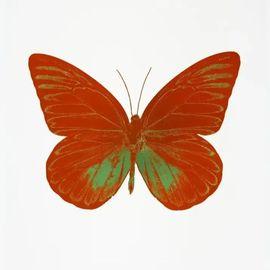
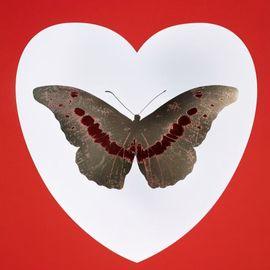
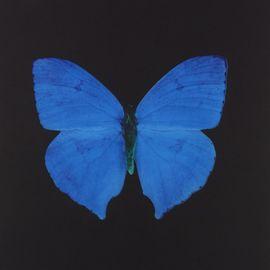
The skull stayed in Hirst's printmaking, but its form changed. In 2009 he issued The Dead, 30 foil block skulls co-published by Paul Stolper and Other Criteria, each colourway in an edition of just 15. The skull now multiplied through colour rather than through edition size. A year later its partner arrived: The Souls, the same foil block format applied to butterflies.
Why Is It Called For The Love Of God?
Is The Diamond Dust On These Prints Real?
Which For The Love Of God Prints Are The Scarcest?
What Marks Should A For The Love Of God Print Carry?
Damien Hirst Series