Andy Warhol|Beethoven (1987)
All Beethoven (1987) Works By Andy Warhol (4)
Significance & Analysis
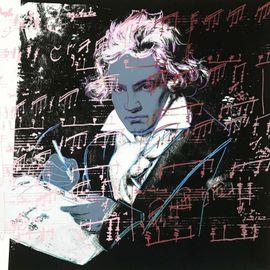
'Beethoven' is one of the last print projects of Warhol's life and the final work in the long run of commissioned portraits that shaped his later career. It applies the method he used on film stars and patrons to one of the most famous composers in the Western canon.
From Bonn to the Factory
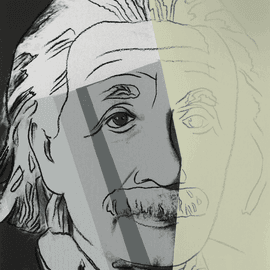
Both source images came from the Beethoven-Haus in Bonn, the composer's birthplace and museum: a reproduction of Stieler's painting and the autograph score. Warhol worked the portrait up from layered screens, and in each print a passage of handwritten music runs across the portrait in a contrasting colour. The score works like the signature on a celebrity photograph. It identifies the sitter by his most famous product, in his own hand.
After Warhol's death
Warhol died on 22 February 1987, before he could sign the edition. The prints were numbered and authenticated instead on the reverse, where the executor of his estate, the publisher and the printer signed a stamped certificate. The portraits were first shown to the public in 1989 at the Beethovenhalle in Bonn, during the city's 2,000th anniversary, by their publisher, the Bonn gallerist Hermann Wünsche, who had brought Warhol to the Rhineland several times since the 1970s. Bonn is again the centre of attention: the Beethoven-Haus is showing the making of the portfolio in 'Beethoven by Warhol', from 9 September 2026 to 5 April 2027.
At auction
Complete sets rarely come up. In October 2022 one, numbered 11/60, realised $541,800, buyer's premium included, in a New York sale of Warhol works from a single private collection.
Before and after
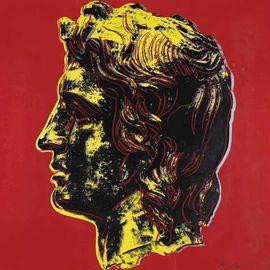
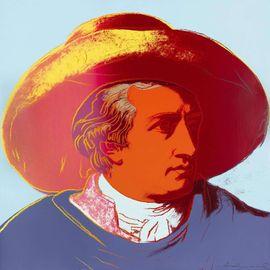
'Beethoven' closes a decade of portraits of historical figures. It follows Goethe (1982), another German cultural hero taken from a famous painted portrait, and Alexander The Great (1982), Warhol's treatment of a Roman-era bronze. With Beethoven the sequence ends: there was no next portrait.
Are The Beethoven Prints Signed By Warhol?
What Is Beethoven IIB.390–393?
Why Is The Moonlight Sonata Written Across Beethoven's Face?
Andy Warhol Series