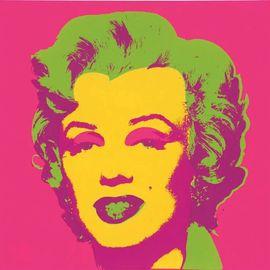
Andy Warhol|Marilyn Monroe (1967)
All Marilyn Monroe (1967) Works By Andy Warhol (10)
Significance & Analysis
The 'Marilyn' portfolio turned Warhol's best-known painted face into an edition and set the pattern for much of his later printmaking: one image, ten sheets, a new colour scheme on each. It was the first portfolio issued by Factory Additions, the print publishing business Warhol set up that year.
One photograph, ten colourways
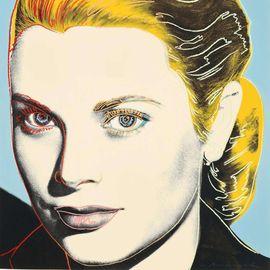
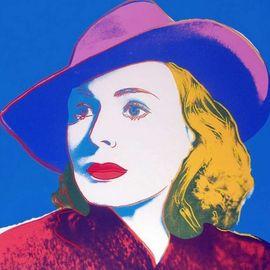
Monroe died in August 1962, and Warhol began painting her within weeks. Every Marilyn he made, on canvas or on paper, starts from the same studio publicity still by Gene Kornman for the 1953 film 'Niagara'. In the prints the palette runs from near-monochrome greys and silvers to fluorescent pinks, greens and yellows. The colour blocks are deliberately printed out of register with the photograph, so the eyeshadow, lips and hair sit slightly apart from the face beneath them. Repeating one publicity image in ten artificial colour schemes, the portfolio is often read as a portrait of celebrity itself: a person reduced to a surface that can be reproduced at will.
Printing and survival
Aetna Silkscreen Products printed the portfolio in New York. Many sets were broken up and sold as single prints soon after publication, so complete sets with matching numbers are now scarce, and they lead the market.
At auction
In May 2022 a complete set numbered 108/250 made $4,980,000 with fees at Christie's New York. It sold four days after the 1964 painting 'Shot Sage Blue Marilyn', made from the same photograph, fetched $195 million at Christie's New York, a record for an American work of art at auction. In December 2025 a matching set numbered 242/250 was the top lot of Ketterer Kunst's evening sale in Munich, selling for €4,488,000.
Before and after
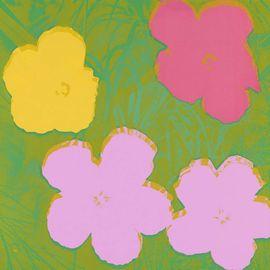
After 'Marilyn', Factory Additions applied the same format to a supermarket product in 'Campbell's Soup' (1968–69) and to a still life in 'Flowers' (1970), each a portfolio of variations on a single image.
What Is The Small Marilyn, F. & S. II.21?
What Do The Marks On The Back Of A Marilyn Print Mean?
How Can You Tell A 1967 Marilyn From A Sunday B. Morning Print?
Andy Warhol Series