Andy Warhol|Diamond Dust Shoes (1980)
All Diamond Dust Shoes (1980) Works By Andy Warhol (5)
Significance & Analysis
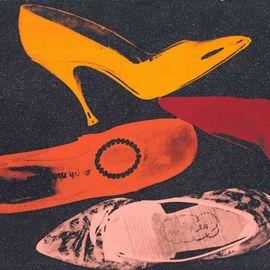
'Diamond Dust Shoes' took Warhol back to the subject that had made his name as a commercial artist, and covered it in glitter. "I'm doing shoes because I'm going back to my roots," he said. In the early 1950s he had drawn shoe advertisements for I. Miller, and 'Women's Wear Daily' called him "the Leonardo da Vinci of the shoe trade".
A box from Halston
The series began as an advertising assignment from the fashion designer Halston. Victor Hugo, Halston's partner, sent a large box of Halston shoes to the studio, and Ronnie Cutrone, Warhol's studio assistant, tipped them out onto the floor. Warhol liked the way they landed. The studio then photographed shoes laid out on white paper, some of them Warhol's own, and those photographs became the source for both the canvases and the prints. The series has been linked with the disco glamour of Studio 54 in early-1980s Manhattan.
Glass that catches the light
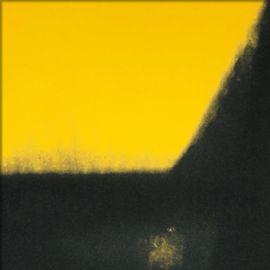
Diamond dust came to Warhol through his printer, Rupert Jasen Smith, who introduced him in 1979 to a powder ground from industrial stones. Warhol found it too chalky and switched to pulverised glass, which leaves a raised, sparkling crust on the ink. One print, II.255, is printed in black.
Before and after
The shoes look back to Warhol's 1950s drawings of footwear, gathered in books such as 'À la Recherche du Shoe Perdu' (1955), with its hand-coloured outlines and his mother's lettering. Diamond dust then became a recurring finish in his 1980s editions: it returned in 'Myths' (1981), and in 1985 on the Royal Edition of 'Reigning Queens' and on 'Cologne Cathedral'.
How Many Diamond Dust Shoes Prints Were Editioned?
What Is The Deluxe Edition Of Diamond Dust Shoes?
Which Diamond Dust Shoes Impressions Sit Outside The Edition?
How Do The Prints Differ From The Diamond Dust Shoes Paintings?
Andy Warhol Series