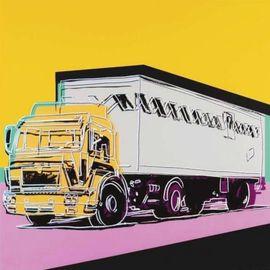
Andy Warhol|Camouflage (1987)
All Camouflage (1987) Works By Andy Warhol (6)
Significance & Analysis
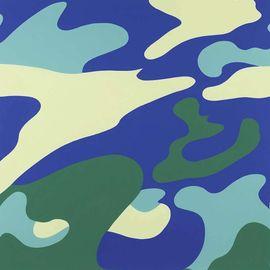
'Camouflage' takes a pattern designed to make soldiers disappear and makes it impossible to miss. At the end of a career built on recognisable faces and brands, Warhol chose an image with no subject at all, and the portfolio is often read as his late, playful answer to abstract painting.
Pattern as picture
Camouflage entered Warhol's work in 1986, in paintings and in self-portraits where the pattern runs across his own face. For the portfolio he kept the same interlocking shapes and varied everything else: the scale of the pattern, the pairing of colours and the contrast between them. Some sheets stay close to army greens and browns; others turn the pattern into neon reds, pinks and oranges, where it hides nothing.
An unsigned last edition
Warhol showed the prints only once in his lifetime, at a group exhibition in New York in 1986. The portfolio was printed by Rupert Jasen Smith, Warhol's printer through the 1980s, and finished with his studio assistant Jay Shriver shortly before Warhol's death in February 1987. Because the edition was released after his death, the prints were never signed by him. Each is numbered and signed on the reverse by the executor of his estate on a stamped certificate, and inscribed "REG ED." for the regular edition.
Before and after
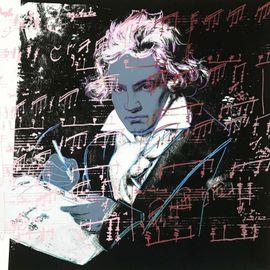
'Camouflage' ends Warhol's printmaking alongside Beethoven, the portrait portfolio made in the same final weeks and authenticated by the estate in the same way. Where 'Beethoven' closes his run of famous faces, 'Camouflage' leaves the face out altogether.
Why Are The Camouflage Prints Not Signed By Warhol?
How Many Camouflage Prints Exist?
Are The Eight Camouflage Prints Different Images?
Andy Warhol Series