Andy Warhol|Electric Chair (1971)
All Electric Chair (1971) Works By Andy Warhol (10)
Significance & Analysis
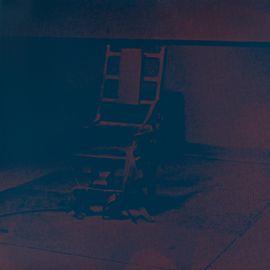
'Electric Chair' put the starkest image of Warhol's 1960s paintings into an edition of prints. Its source is a press photograph labelled "Sing Sing's Death Chamber" and dated 13 January 1953, showing the chair in which Julius and Ethel Rosenberg, convicted of passing atomic secrets to the Soviet Union, were executed that June.
From the Death and Disaster paintings
Warhol first painted the chair in the early 1960s, among the pictures of car crashes, suicides and riots taken from news images that became known as his Death and Disaster series. He traced that series to a newspaper front page headlined "129 DIE IN JET". He returned to it on canvas several times in that decade, and the paintings show the whole room, with a "Silence" sign above a door at the right.
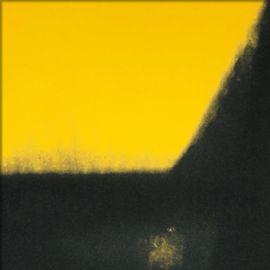
For the 1971 prints Warhol cropped in close. The doorway and the sign are gone, and the chair, its restraining straps hanging loose, fills the sheet. Every sheet carries the same image; the colour combination is the only change from print to print.
The series is often read two ways at once. It can be seen as a condemnation of execution by the state, rooted in a specific chair and a specific case. It can also be seen as a demonstration of how repetition and decorative colour drain a terrible image of its force, the effect Warhol explored throughout Death and Disaster.
Publisher and printer
The portfolio was published in Europe rather than by Warhol's own New York print company. Bruno Bischofberger, the Zurich dealer who had worked with Warhol since 1966, issued it, and it was printed by Silkprint Kettner.
At auction
A complete portfolio from the numbered edition made $466,200 with fees at Christie's New York in May 2022, the best result for the prints in the past five years. The unique canvases are priced on another scale entirely: a 1964 'Little Electric Chair' painting fetched $4,500,000, fees included, at Christie's New York in March 2023.
Before and after
The portfolio followed the run of large editions in which Warhol turned his 1960s paintings into prints, Marilyn (1967), Campbell's Soup (1968–69) and Flowers (1970). It came out in the year the Whitney in New York gave him a retrospective.
Why Did Warhol Print The Electric Chair In Bright Colours?
What Should I Check On An Electric Chair Print?
Are There Electric Chair Paintings As Well As Prints?
Andy Warhol Series