Andy Warhol|Flash – November 22, 1963
All Flash – November 22, 1963 Works By Andy Warhol (10)
Significance & Analysis
'Flash – November 22, 1963' records the Kennedy assassination as the public met it, through headlines, bulletins and photographs repeated for days, rather than as an event seen at first hand. Warhol was painting alone in his studio when he heard the news on the radio. "I don't think I missed a stroke," he later recalled. What bothered him was the way television and radio were "programming everybody" to feel sad.
A portfolio built like a newspaper
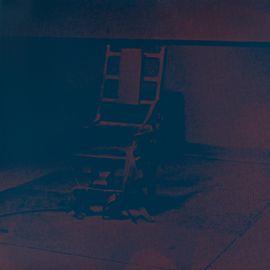
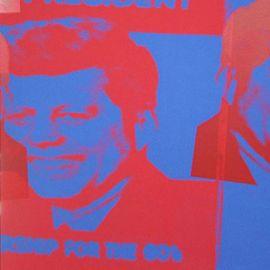
The cover reproduces the front page of the 'New York World-Telegram' from that day, under the headline "President Shot Dead". Inside, the pictures come from campaign posters, wire photographs and advertisements, and the presidential seal appears among them. Several images are repeated, overlapped or cropped. Each print sits in a folder of Teletype reports chosen by Phillip Greer, credited as the portfolio's author, so the pictures come with the wire-service words that first carried them. The title borrows that language too: a news flash is the first urgent bulletin on a story.
Printing and publishing
Aetna Silkscreen Products in New York printed the portfolio for Racolin Press of Briarcliff Manor, New York. The Museum of Modern Art in New York holds a complete set, and the Walker Art Center in Minneapolis holds prints from the series.
At auction
In October 2023 a complete portfolio with its cover, colophon and text pages made $82,550 with fees at Phillips in New York. Earlier complete sets made £60,000 at Phillips London in January 2017 and $93,750 at Phillips New York in April 2014, both with fees.
Before and after
Warhol had worked from the same coverage before. In 1965 he made three screenprints of Jacqueline Kennedy for the '11 Pop Artists' portfolios, from press photographs of her taken just before and after she was widowed. This portfolio pulls back from her face to the whole news story. Aetna printed it between two portfolios for Warhol's own company, Factory Additions: 'Marilyn Monroe' (1967) and 'Flowers' (1970). Each of those works one picture through a run of colours, where this one assembles a sequence of news pictures.
How Was Flash – November 22, 1963 Editioned?
What Comes In A Complete Flash – November 22, 1963 Portfolio?
What Is Different About The Lettered Flash – November 22, 1963 Portfolios?
Andy Warhol Series