Andy Warhol|Campbell's Soup I and II
All Campbell's Soup I and II Works By Andy Warhol (16)
Significance & Analysis
The two 'Campbell’s Soup' portfolios turned Warhol's breakthrough image into a product in its own right. In 1962 he had shown 32 hand-painted soup can canvases at the Ferus Gallery in Los Angeles; six years later he had the cans printed commercially, 250 sets at a time, and sold them from the Factory.
Factory Additions
Warhol set up Factory Additions in 1967 to publish large editions of prints based on his best-known images. Its portfolios came in sets of ten, in editions of 250, made by commercial printers so that every impression would match. That uniformity suited the subject: a supermarket can that looks the same on every shelf now looked the same in every portfolio.
Two portfolios, twenty flavours
'Campbell's Soup I' keeps to the classic red-and-white labels, from 'Tomato' and 'Chicken Noodle' to 'Black Bean'. 'Campbell's Soup II' a year later uses the company's updated, busier labels and stranger varieties, among them 'Hot Dog Bean', 'Tomato Beef Noodle O’s' and 'Golden Mushroom'. Each can is shown alone and head-on, without the grid or repetition of the paintings.
At auction
Complete sets are the market's benchmark. A full 'Campbell's Soup I' brought $1,814,500 in March 2023 at Sotheby's in New York, premium included, while a complete 'Campbell's Soup II', numbered 22/250, made $381,000 at Rago in January 2025.
Before and after
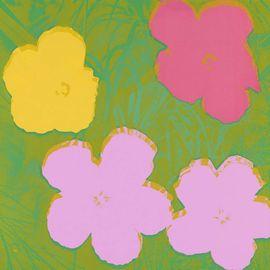
The portfolios sit in the run of Factory Additions editions that began with Marilyn in 1967 and continued with Flowers in 1970, as Warhol turned his signature paintings of the 1960s into prints. The can itself went back further, to the soup can drawings of 1961–62 traced from photographs, a habit that runs back to A Gold Book.
How Are Campbell's Soup Prints Signed?
What Are Sunday B. Morning Soup Cans?
Which Flavours Are In Each Campbell's Soup Portfolio?
Andy Warhol Series