Andy Warhol|Myths (1981)
All Myths (1981) Works By Andy Warhol (5)
Significance & Analysis
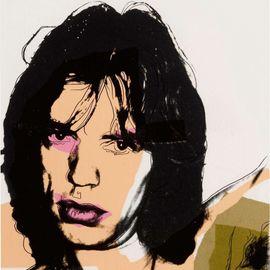
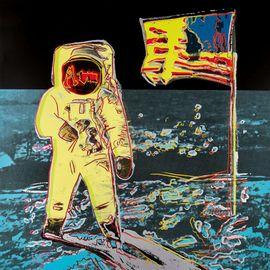
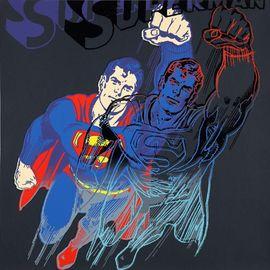
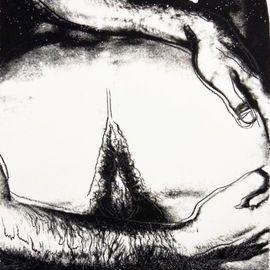
'Myths' pictures America through the characters it grows up with rather than the people it reads about. The title treats a cartoon mouse, a comic-book hero, a national emblem and a screen goddess as a modern mythology.
Clearing the rights
Ronald Feldman commissioned the portfolio, and Warhol started work in October 1980. Many of the characters were owned by companies, so the project ran on negotiation. Disney allowed Mickey Mouse in return for a fee, prints and an undertaking not to show him in a sexualised or derogatory way. When the estate of Haddon Sundblom, the illustrator behind the Coca-Cola Santa, refused permission, Warhol made his own Santa Claus. Most of the images come from photographs Warhol took specially for the series, a change from the publicity stills behind his 1960s celebrities. Even 'Howdy Doody' is based on his own photograph of the original puppet. The actress Margaret Hamilton posed again as the Wicked Witch from 'The Wizard of Oz' (1939), accepting prints instead of a fee.
The prints
Rupert Jasen Smith printed the ten images on Lenox Museum Board, finished with diamond dust that glitters as the viewer moves. The colour is clean and tightly controlled, with black laid on black in 'Dracula' and close tones in 'Mammy'. Some critics at the time found that polish too slick beside the clogged screens of Warhol's 1960s prints. The portfolio was first shown at Ronald Feldman Fine Arts in New York in September 1981. In 1988 the Children's Museum of Pittsburgh opened a gallery built around its own set.
At auction
In October 2023 a 'Superman' trial proof, numbered TP 26/30, made £508,000 with fees at Sotheby's in London. A complete suite of the ten edition prints sold at Christie's New York in October 2018 for $780,500.
Before and after
'Myths' came after 'Ten Portraits of Jews of the Twentieth Century' (1980), Warhol's earlier portfolio with the Feldmans, and swapped real figures from history for invented ones. Its comic-book heroes also look back to his comic-strip paintings of the early 1960s. 'Endangered Species' (1983) turned to living animals, and 'Ads' (1985) went back to Disney with Donald Duck.
Who Is The Shadow In Warhol's Myths?
What Is A Unique Myths Print?
Why Is Mammy In Myths Instead Of Aunt Jemima?
Andy Warhol Series