Andy Warhol|Endangered Species
All Endangered Species Works By Andy Warhol (8)
Significance & Analysis
'Endangered Species' applied the treatment Warhol gave film stars and consumer products to animals at risk of extinction. It appeared ten years after the United States passed the Endangered Species Act of 1973, and each animal Warhol chose had been listed under it.
The commission
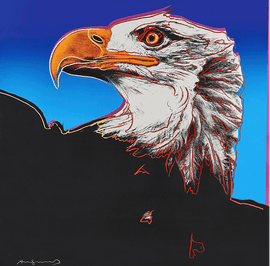
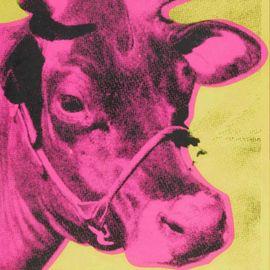
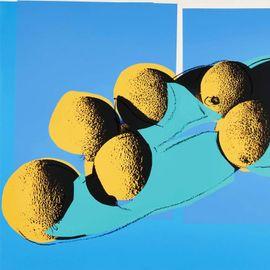
The idea came from Ronald and Frayda Feldman, the New York gallerists who published much of Warhol's work in the 1980s and were committed environmental campaigners. The ten subjects are the African Elephant, Bald Eagle, Bighorn Ram, Black Rhinoceros, Giant Panda, Grevy's Zebra, Orangutan, Pine Barrens Tree Frog, San Francisco Silverspot butterfly and Siberian Tiger. Warhol rendered them in saturated, unnatural colour and loose drawn line, and referred to the series as "animals in make-up".
Most of the animals are isolated against plain backgrounds; the African Elephant is the exception, shown against a landscape.
Printing and edition
The prints were made by Rupert Jasen Smith, the printer behind most of Warhol's major editions of the 1980s. Beyond the main edition of 150 there were 30 artist's proofs and several smaller proof groups, including an edition of ten numbered in Roman numerals. That Roman-numeral edition was given to wildlife and conservation organisations, extending the portfolio's campaigning purpose.
At auction
Complete sets rarely come to market, and in November 2024 one sold for £3.43 million including fees, the highest price the portfolio has reached at auction. Proofs now command a premium over the main edition: a trial proof of 'Black Rhinoceros' made £190,500 at Phillips London in September 2024, while a main-edition 'African Elephant' sold for $126,000 at Phillips New York in October 2022.
Before and after
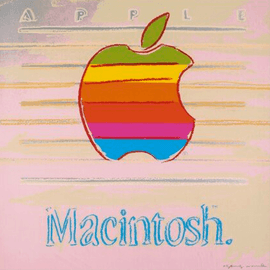
'Endangered Species' belongs to the run of large portfolios Warhol made with the Feldmans in the early 1980s, after Myths and Ten Portraits of Jews of the Twentieth Century. With Ads in 1985, another Feldman portfolio printed on the same Lenox Museum Board, he turned from conservation back to the advertising imagery that had made his name.
How can I tell which edition my Endangered Species print is from?
What is the catalogue raisonné number for Warhol's Endangered Species?
Did Warhol make other work about endangered animals?
Are all Endangered Species prints signed?
Andy Warhol Series