Andy Warhol|Ten Portraits of Jews of the Twentieth Century
All Ten Portraits of Jews of the Twentieth Century Works By Andy Warhol (9)
Significance & Analysis
Warhol insisted that the subjects of the series be people who had died, so every portrait is posthumous. He called the series his "Ten Jewish Geniuses".
What the prints show
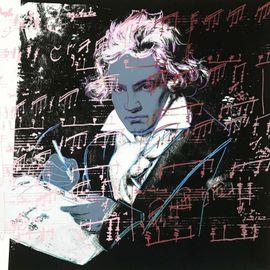
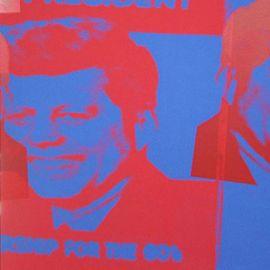
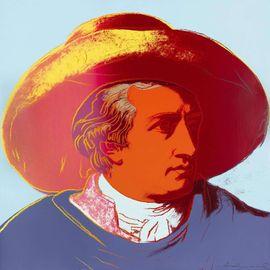
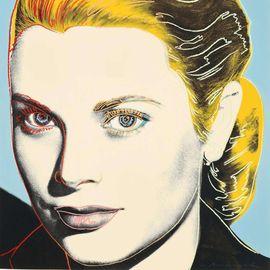
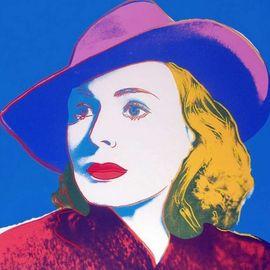
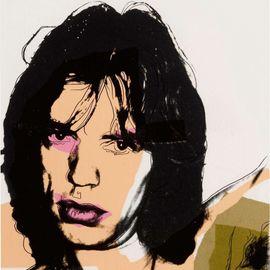
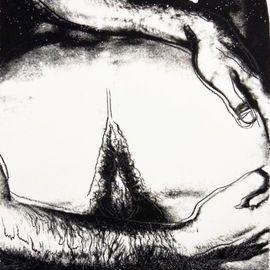
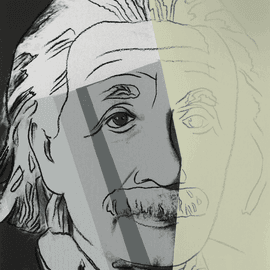
Each portrait starts from an existing photograph. The sitters include writers, a physicist, a Supreme Court justice, a composer, performers and a prime minister. Ronald Feldman researched the source photographs and secured the rights to them, and the photographer Trude Fleischmann gave Warhol a signed portrait of Einstein free of charge. The prints are portrait sheets of Lenox Museum Board, 101.6 x 81.3 cm, large enough to be seen clearly across a gallery. Warhol also made the portraits as paintings: square silkscreened canvases of 101.6 x 101.6 cm, produced in five sets of ten.
How the series was received
The series was first shown in March 1980 at the Jewish Community Center of Greater Washington in Maryland. The Jewish Museum in New York showed the prints and related paintings from September 1980 to January 1981. Reviews were divided. Some critics called the show "vulgar" and "tawdry" and accused Warhol of exploiting his Jewish subjects; others praised the portraits. The National Portrait Gallery in London showed the series in 2006, and in 2008 the Jewish Museum returned to it with 'Warhol's Jews: Ten Portraits Reconsidered'.
Where the series sits in Warhol's work
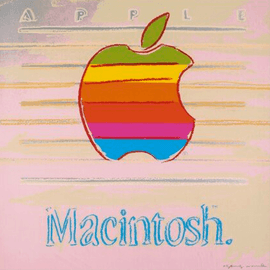
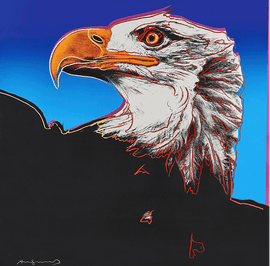
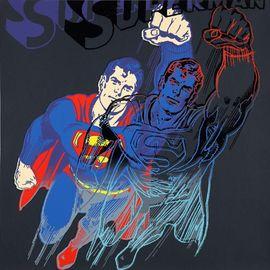
Ronald Feldman went on to commission 'Myths' (1981), another ten-print portfolio, which replaced real people with characters from cartoons, comics and film. Two more Feldman portfolios followed: 'Endangered Species' (1983), of threatened animals, and 'Ads' (1985), of advertising images.
Auction results
In October 2022 a full set of the ten prints, numbered 196/200, made $403,200 with fees at Phillips New York, the top lot of that sale. In October 2023 an artist's proof of 'Albert Einstein (FS II.229)', sold to benefit the Chicago Psychoanalytic Institute, made $88,900 with fees, also at Phillips New York. Single prints from the edition made $15,240 ('Louis Brandeis (FS II.230)', September 2024) and $25,400 ('Sigmund Freud (FS II.235)', April 2025) at Phillips, both with fees.
How Many Ten Portraits of Jews of the Twentieth Century Prints Were Made?
Who Chose The Ten Sitters?
How Can You Tell An Edition Print From A Trial Proof?
Andy Warhol Series