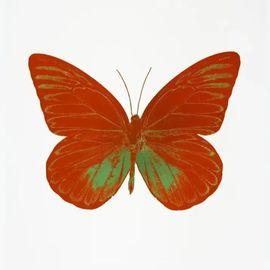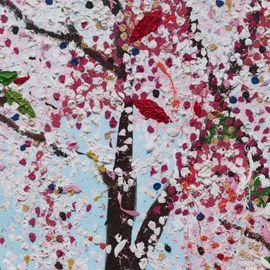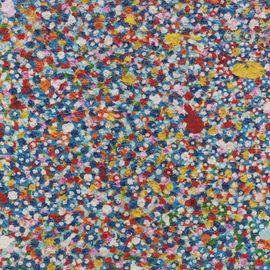
Damien Hirst|The Elements (H6)
All The Elements (H6) Works By Damien Hirst (4)
Significance & Analysis
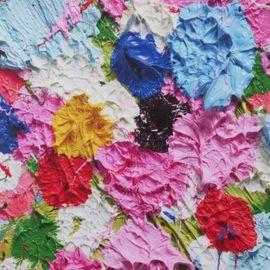
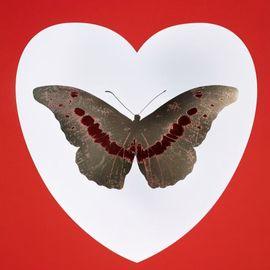
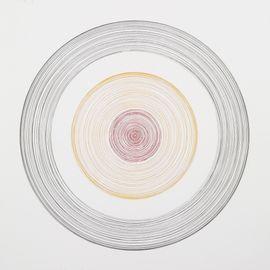
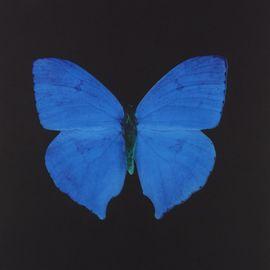
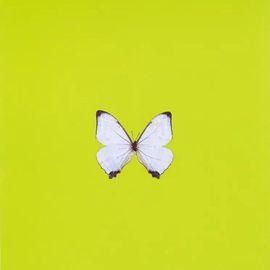
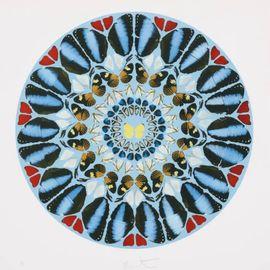
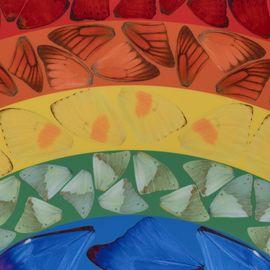
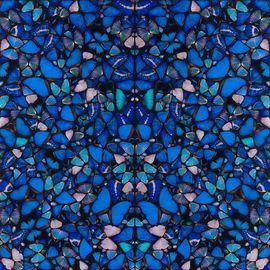
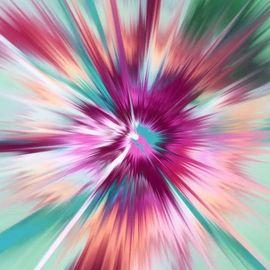
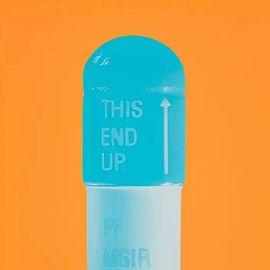
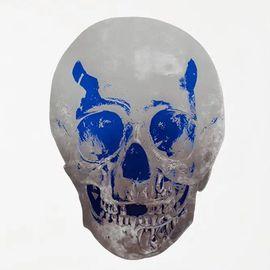
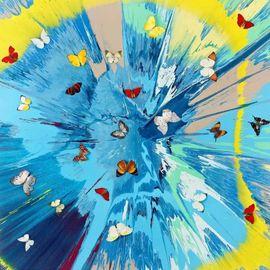
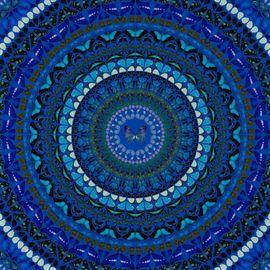
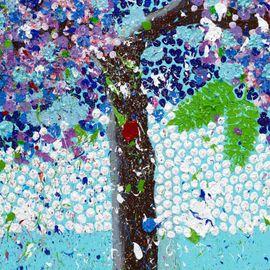
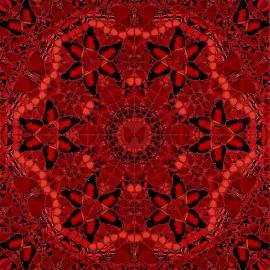
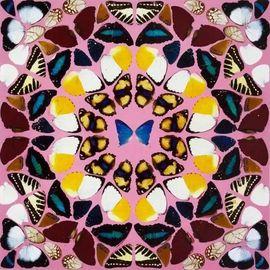
'The Elements' returns to an idea Hirst first gave form in 1992 and works it out in butterfly wings. Its subject is the ancient belief that all matter was made of four elements, which had to stay in balance for body and spirit to be well. For more than two thousand years that belief underpinned philosophy, science and medicine. From 'Pharmacy' to the kaleidoscope In 'Pharmacy' (1992), Hirst used four glass apothecary bottles of coloured liquid to stand for the elements. Bottles like these once let people who could not read find a chemist's shop, and before modern medicine the elements themselves were used to treat the sick. Both lead back to a question Hirst has pressed throughout his career: why people put their faith in cures. He has said he could not understand why people "believe in medicine and don't believe in art". Here the same thought is carried into his butterfly kaleidoscopes, where the insect has long stood for rebirth. A temperament for each element Each panel gives its element a character. 'Earth' is warm, a dense but delicate web of wings that plays on the old idea of the earth as a mother who feeds us. 'Air', the least tangible of the four, is pale and still, made for slow looking. 'Fire' is the most violent composition, a burst of energy for an element that destroys and renews in the same act. 'Water' casts a ripple through vivid blue wings and recalls the water that runs through Hirst's work, from the formaldehyde tanks of the 1990s to 'Treasures from the Wreck of the Unbelievable' (2017). Nothing here is a real specimen: the wings are photographed, printed and sealed under acrylic, so the face of each panel is smooth. At auction 'Air' holds the best result found for the series in the last five years: in September 2022 one fetched £27,720 at Phillips London, buyer's premium included, more than twice its high estimate. Before and after 'The Elements' followed H6 - The Aspects (2019), five blue and white butterfly panels, and kept its square Diasec format and small fixed edition. Between the two, in May 2020, H7 - Rainbow Editions had laid photographed wings out in stripes to raise money for charity. After 'The Elements', Hirst moved from wings to paint with H8 - Fruitful And Forever, released that September, and butterflies did not return to a numbered HENI series until H10 - The Empresses in 2022.
Is H6 - The Elements Part Of H6 - The Aspects?
How Were H6 - The Elements Prints Sold?
How Is An H6 - The Elements Panel Signed?
Damien Hirst Series