Damien Hirst|The Kaleidoscopes (H18)
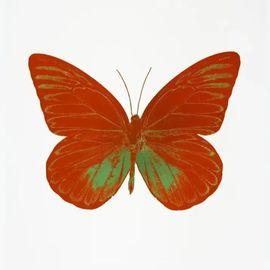
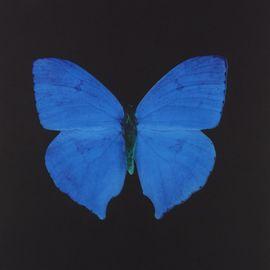
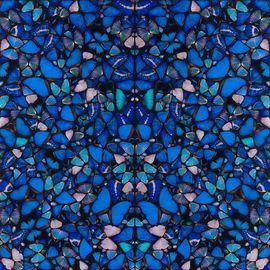
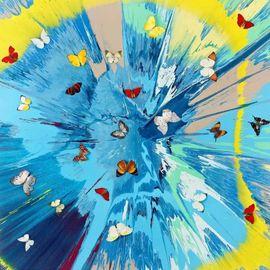
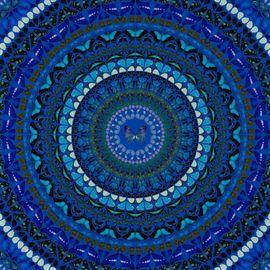
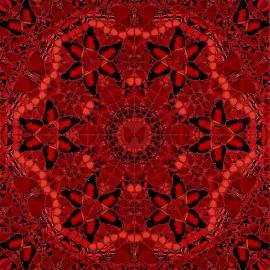
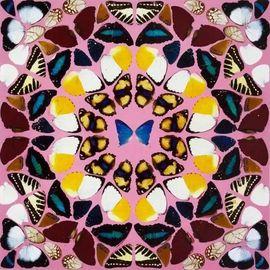
'H18 - The Kaleidoscopes' gathers five Damien Hirst butterfly prints, issued by HENI in 2024 as Diasec-mounted giclées on aluminium. Each 85 x 140 cm panel sets butterfly wings in a symmetrical pattern on a bright ground, in a fixed edition of 180 with 20 artist's proofs.
All The Kaleidoscopes (H18) Works By Damien Hirst (8)
Significance & Analysis
'The Kaleidoscopes' brought Hirst's numbered HENI series back to the wing patterns he has made since 2001, and sold them on stricter terms than the releases either side of it. From a tea tray
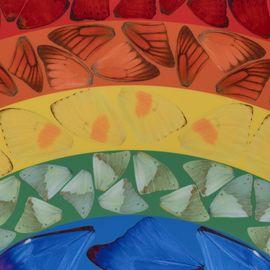
The first 'Kaleidoscope' painting, 'It's a Wonderful World', dates from 2001. Hirst made it, and those that followed, by setting thousands of wings in geometric patterns into household paint. The starting point was a Victorian tea tray with butterflies arranged under glass in its base, and Hirst wanted to "make some of them bigger than tea trays". A major group of the paintings filled his 'Superstition' exhibition at Gagosian in 2007.
The rows of wings also recall the specimens pinned in Victorian cabinets. That ties the series to Hirst's long interest in life, death and the urge to keep hold of a beauty that does not last.
Faith and colour
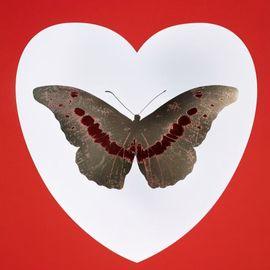
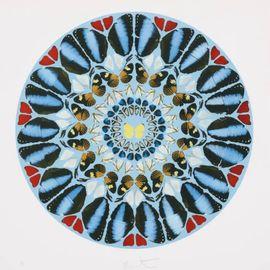
Butterflies carry old meanings in Hirst's work. Ancient Greek art used them for Psyche, the soul, and Christian imagery for the resurrection. Most 'Kaleidoscope' titles come from the language of faith, and so do those of the earlier prints shown alongside H18 on this page: the diamond-shaped silkscreens 'Sceptic' and 'Faithless' (2006), 'Pardon' (2012), 'Covenant' and 'Deific' (2013), and the smaller 'Beneficence' and 'Miracle' (2015). The 2024 titles break that habit. 'Harlequin', 'Chameleon', 'Psychedelic', 'Splendour' and 'Intricacy' name costume, disguise, colour and detail, so the five can be read as the motif offered for its visual play: patterns that seem to shift and rotate as the eye crosses them.
Panels and sequence
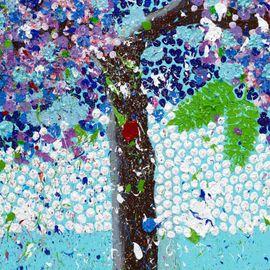
Unlike the earlier works on paper, the 2024 prints are images face-mounted on aluminium composite in a wide landscape format. The iridescence of real wing scales is reproduced as printed colour under a smooth, glossy face. H10 - The Empresses had already arranged red wings in kaleidoscope-like formations in 2022, finished with glitter. H17 - Civilisation, two months before H18, let orders decide its editions; this release capped every image in advance and took applications instead. H19 - The Dreams followed in March 2025 with butterflies over spin paintings, and handed the edition sizes back to demand.
Are Covenant And Deific Part Of H18 - The Kaleidoscopes?
Why Does Hirst Leave Out The Bodies In H18 - The Kaleidoscopes?
Because Hirst wanted the beauty of the butterfly without its body. He recalls being told that butterflies are beautiful but spoiled by the hairy bodies in the middle, and in the 'Kaleidoscope' works he kept only the iridescent wings. Freed from the insect, each wing becomes a unit of colour and shape that can be set in rings and diamonds, which gives the panels their stained-glass symmetry.
How Were H18 - The Kaleidoscopes Prints Sold?
By application rather than first come, first served. HENI took applications from 24 October to 4 November 2024, reviewed each one and allocated prints to spread the edition widely; applicants could ask for all or part of their order. Because the editions were fixed, there are 900 numbered prints across the five images plus 100 artist's proofs, and a matching set can carry any number from 1 to 180.
Where Is An H18 - The Kaleidoscopes Print Signed?
On the back. Hirst signed each panel by hand on the HENI label on the reverse, where it is also numbered, so the face is unmarked. The panels are flush-mounted to aluminium with a metal strainer on the reverse, as issued, and arrived in HENI's own box, which is worth keeping with the work.
Damien Hirst Series